Affiliate disclosure: Padel Mad is reader supported. If you buy through the links on this page we may earn a small commission at no extra cost to you. See our affiliate disclosure for details.
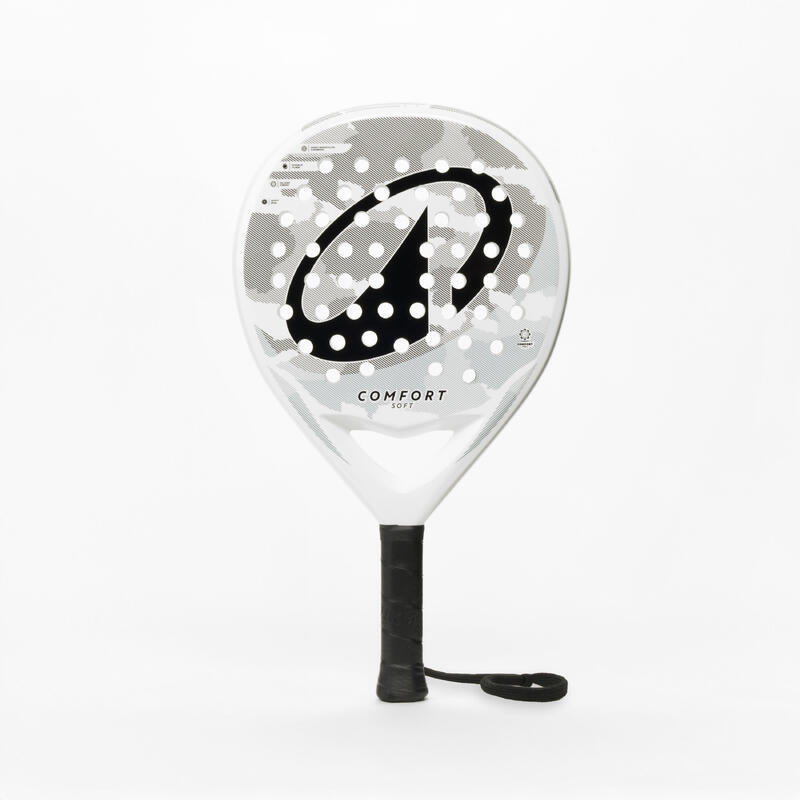
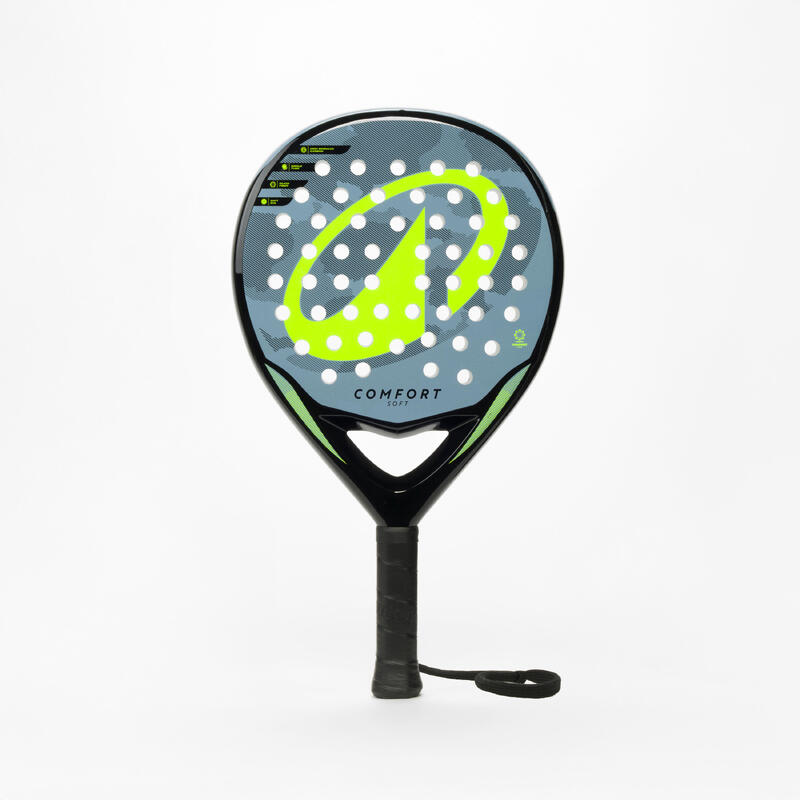
Most padel players in the UK buy their first proper racket somewhere between the £30 hire bat they borrowed at the club and the £200 carbon weapon they see the pros using. That middle ground is exactly where the Kuikma PR Comfort Soft sits. It is Decathlon’s soft, round, control focused frame at £39.99, and with 372 reviews averaging 4.6 out of 5 it is one of the most bought padel rackets in the country.
The question is whether “soft and forgiving” translates into a racket you actually want to keep playing with once you stop shanking the ball, or whether it is a stepping stone you outgrow in a season. Here is an honest look at the specification, what it is genuinely good at, and where it runs out of road.
Check current price at Decathlon UK »
At a glance: Kuikma PR Comfort Soft specifications
| Price | £39.99 (check current price) |
| Weight | 350 g, plus or minus 7 g |
| Shape | Round |
| Balance | Low, 260 mm (head light) |
| Frame profile | 38 mm |
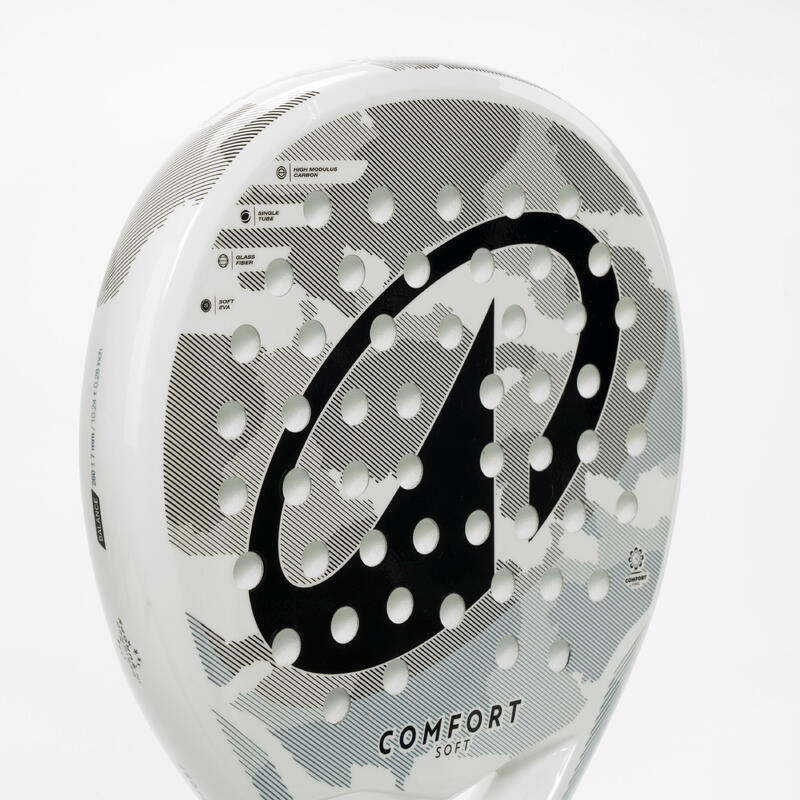
| Face material | Fibreglass, two layers, smooth (not rough textured) |
| Core | Soft EVA foam |
| Head size | 450 to 459 cm² |
| Frame composition | 74% glass fibre, 26% EVA |
| Colourways | Black/white, black/red, light grey/electric green |
| Rating | 4.6 out of 5 from 372 Decathlon reviews |
| Warranty | 2 years |
Who this racket is for
Decathlon labels the PR Comfort Soft as intermediate, and its own spec sheet also lists it under beginner. In practice that second label is the more useful one. This is a racket for the player who has had five or ten sessions, has decided padel is going to stick, and wants something better than a club hire bat without spending three figures.
It suits you if you are still finding the middle of the face reliably, if your arm has started to ache after long sessions, or if you play mostly social doubles where getting the ball back consistently matters far more than hitting winners. It also makes a sensible second racket to keep in the bag for guests.
It is not the right racket if you already smash confidently and want the ball to leave the face at pace, or if you are chasing spin. Those players should be looking at a carbon face and a teardrop or diamond head. Our guide to choosing your first padel racket walks through how shape, balance and core density interact if you are unsure where you sit.
On court: what the specification actually feels like
The soft EVA core does the heavy lifting
The single most important number here is not the weight, it is the core. A soft EVA foam compresses more on contact, which does two useful things for a developing player. The ball sits on the face marginally longer, which makes placement easier to feel, and the shock that travels back into your wrist and elbow is noticeably damped compared with a hard EVA competition frame.
If you have ever borrowed a stiff carbon racket and finished a session with a sore forearm, this is the difference you were feeling. The trade off is honest and Decathlon states it plainly in the product copy: moderate ball speed. You are buying comfort and forgiveness, and you are paying for it in power.
Round head, low balance, large sweet spot
At 260 mm the balance point sits well down towards the grip, which makes the racket feel lighter in the hand than its 350 g suggests. Combined with the round head, the sweet spot sits centrally and covers a generous area of a 450 to 459 cm² face. Off centre hits still come back over the net rather than dribbling into the bottom of the glass.
That head light balance is also why volleys and quick reaction blocks at the net are the strongest part of this racket’s game. You can get the face into position fast, and the frame does not fight you when you have to change direction mid swing.
Fibreglass face means comfort, not bite
Two layers of glass fibre make up the frame, and the surface is listed as not rough. Fibreglass flexes more than carbon, which is a large part of why the racket feels so soft, but a smooth flexible face grips the ball less. If you are trying to put heavy topspin on a bandeja or cut hard under a víbora, you will feel the limit fairly quickly.
For most players at this level that is not a real loss, because spin generation is a technique problem long before it is an equipment problem. It is worth knowing before you buy, though, because plenty of rackets at similar money now use a lightly textured face.
350 g is mid weight, not light
This is the one place where the marketing and the numbers pull in different directions. Decathlon sells the racket on manoeuvrability, and the low balance genuinely delivers that. But 350 g is squarely mid weight. Smaller framed players, juniors and anyone with existing shoulder problems may still find it a handful over a two hour session, regardless of where the balance point sits. If weight is your main concern, look at lighter frames rather than assuming a low balance solves it.
Pros and cons
What we like
- Genuinely arm friendly. The soft EVA core plus flexible fibreglass is one of the gentlest combinations you can buy at any price.
- Large, central, forgiving sweet spot on a round head.
- Head light balance makes net play and quick blocks easy.
- £39.99 for a frame with a two year warranty is strong value, and Decathlon’s returns policy is straightforward.
- Three colourways, so you are not stuck with one look.
- Enormous review base at 4.6 out of 5 from 372 buyers, which is unusual reassurance at this price.
What we do not
- Low power ceiling. Decathlon itself describes ball speed as moderate, and you will feel that on smashes.
- Smooth fibreglass face gives limited bite, so spin is harder to generate than with a textured or carbon surface.
- 350 g is not light, whatever the balance does for the feel in the hand.
- Fibreglass frames flex more and generally take knocks against the glass and fence less gracefully than carbon over time.
- The “intermediate” badge oversells it. This is a beginner to improver racket and an honest one.
- You will likely outgrow it if you improve quickly, which makes the cheaper PR Open worth a thought if budget is tight.
How it compares
Versus the Kuikma PR Comfort (£44.99). Same family, firmer core. The standard Comfort gives a little more ball speed for a fiver more, at the cost of some of the shock absorption. If your arm is fine and you want slightly more punch, that is the one to look at.
Versus the Kuikma PR 990 Power. A completely different brief. The 990 Power is built to hit through the ball and rewards a player who is already confident overhead. It is the wrong racket for anyone still working on centring.
Versus the Kuikma PR Hybrid Carbon Coki Nieto (£109.99). This is the natural upgrade path once you have a year of play behind you. Carbon face, hybrid shape, far more pop, and considerably less forgiving. Worth the jump only once you are consistently finding the middle.
Versus the Kuikma PR Open (£24.99). If padel is still a maybe rather than a habit, the PR Open costs £15 less and gets you on court. The Comfort Soft is the better racket, but the Open is the smaller bet.
For a broader view across brands, our best beginner padel rackets guide and the full best padel rackets buyer’s guide put this frame in context against everything else on sale in the UK.
Verdict
The Kuikma PR Comfort Soft does one job and does it well. It is a soft, round, head light racket built to make the first year of padel comfortable and consistent, and at £39.99 with a two year warranty it is very hard to argue with on value. The 372 reviews sitting at 4.6 out of 5 are not an accident.
Just buy it for the right reasons. If you want power, spin or a frame that will still suit you in three years, this is not it, and Decathlon’s own spec sheet quietly tells you so with “moderate ball speed” and “not rough”. If you want a forgiving racket that will not leave your elbow sore after Sunday morning doubles, it is one of the best £40 you can spend on padel in the UK right now.
Rating: 4 out of 5 for beginners and improvers. Fewer marks if you are already an aggressive player.
Check current price at Decathlon UK »
Frequently asked questions
Is the Kuikma PR Comfort Soft good for tennis elbow?
It is one of the more sympathetic rackets on sale at this price because of the soft EVA core and flexible fibreglass face, both of which reduce the shock passed into the arm. That is not a medical claim and racket choice is only part of the picture alongside technique, grip size and overgrip. If you are already in pain, see a physiotherapist before you go shopping.
Is 350 g heavy for a padel racket?
It is mid weight. Padel rackets generally run from roughly 340 g to 375 g, so 350 g sits in the lower middle of that range. The 260 mm low balance makes it feel lighter in the hand than the number suggests, but it is not a light racket in absolute terms.
Can a complete beginner use it?
Yes. Despite the intermediate label, the round head, large sweet spot and soft core make it a very sensible first purchase. Beginners on a tighter budget could start with the £24.99 PR Open instead.
Does it come with a cover?
Decathlon does not list a cover in the product details for this model, so assume you are buying the racket alone and budget separately if you want one. A protector and a spare overgrip are worth adding at the same time, and our essential padel accessories guide covers what is actually worth having.
How long will it last?
That depends entirely on how often you play and how often you catch the glass or the fence. Fibreglass frames are flexible and comfortable but take repeated knocks less well than carbon, so a racket protector is a sensible £10 insurance policy on a £40 frame. The two year Decathlon warranty covers manufacturing faults rather than impact damage.
Which colourway should I get?
They are cosmetically different only. Black/white, black/red and light grey/electric green all share the same 350 g, 260 mm, soft EVA build, so pick whichever is in stock in the finish you prefer.
Prices and availability were correct at the time of writing. Always check the current price and stock before buying. Playing outdoors in British weather? Our guide to the best padel balls for UK courts and the best padel shoes for UK players will finish the kit off.