


If you have ever turned up to a court with a tube of cheap supermarket balls and wondered why every smash felt dead off the glass, you already understand why the ball you play with matters. The HEAD Padel Pro is the ball a huge number of UK clubs, leagues and tournaments default to — and for good reason. It is the ball HEAD built its tour reputation on, and the range now splits neatly into a control model (Pro / Pro+) and a faster model (Pro S / Pro S+), so you can match the ball both to the way you play and to the weather you play in.
In this review we look at how the HEAD Padel Pro actually performs on court, the important difference between the Pro and the Pro S, how long a tube really lasts, and whether it is worth paying tournament-ball money when budget balls exist. The short version: for anyone playing regularly it is one of the safest picks on the market — you just need to buy the right variant for your courts.
Disclosure: Padel Mad is reader-supported. If you buy through links in this article we may earn a small commission at no extra cost to you. We only recommend gear we would happily use ourselves. Prices were correct at the time of writing (July 2026) — always check the current price before buying.
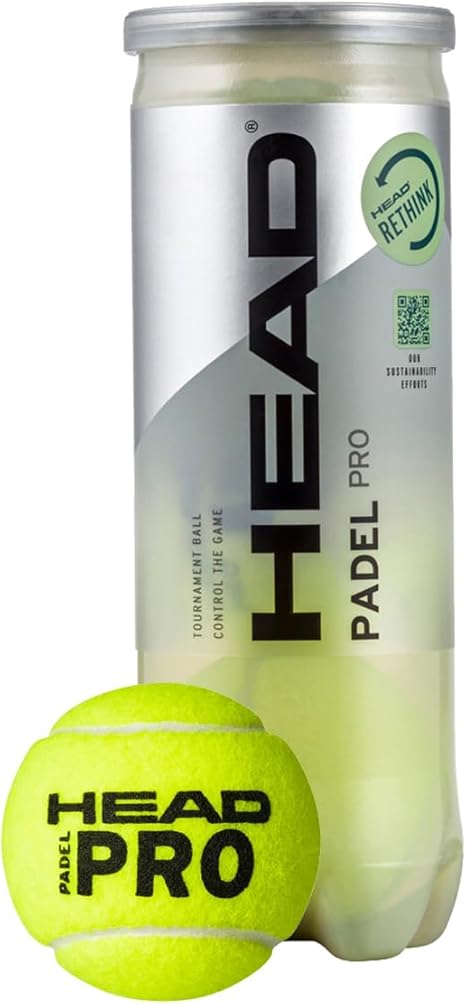
HEAD Padel Pro: at a glance
- Type: Pressurised, tournament-grade padel balls (sold in tubes of 3).
- Two families: Pro / Pro+ = control and a slightly lower, slower bounce; Pro S / Pro S+ = higher pressure, a livelier and faster bounce.
- Best for: Pro/Pro+ shine on warm, dry or indoor courts; Pro S/Pro S+ are the ones to reach for on cold, damp UK outdoor courts.
- Felt: Durable, high-visibility tournament felt; the newer “+” balls use an exclusive padel felt and a core that holds pressure for longer.
- Pedigree: HEAD was the official ball of the World Padel Tour and its balls are made to FIP (International Padel Federation) specification; the Pro S+ is the official ball of the International Padel Experience (IPE) amateur circuit.
- Typical UK price: from around £4.49–£5.49 a tube of three at Decathlon UK, with a 6-ball pack around £9.99 and a club case of 24 tubes around £109.99.
Who are the HEAD Padel Pro balls for?
These are balls for players who take their padel seriously enough to notice the difference. If you play once a week or more, enter club box leagues, or want your practice to feel the same as match day, a consistent tournament ball is worth the small extra outlay. The HEAD Pro line is also the sensible default if your club already uses HEAD balls in competition — training on the same ball removes one variable from your game.
If you only play occasionally, a budget or non-pressurised ball will get you through and save a few pounds. But you will feel the drop in bounce and control, and cheaper felt tends to fluff and go bald faster. For most regular UK players, the HEAD Pro sits in the sweet spot between price and performance.
On-court performance and feel
What stands out with the HEAD Padel Pro is consistency. Out of a fresh, sealed tube the three balls feel identical, and the bounce off the back glass is predictable — which is exactly what you want when you are setting up a bandeja or reading a lob. The standard Pro has a slightly softer, more cushioned contact that rewards touch: drop shots die where you want them and you can shape the ball around the court rather than just blasting it.
The felt is a genuine strength. It grips the rough face of a modern carbon racket well, so you can generate real spin, and it holds up to abrasive sand-dressed courts better than cheaper balls. Visibility is good too — the bright, even nap is easy to track in flat winter light, which matters more than people admit on a grey British afternoon.
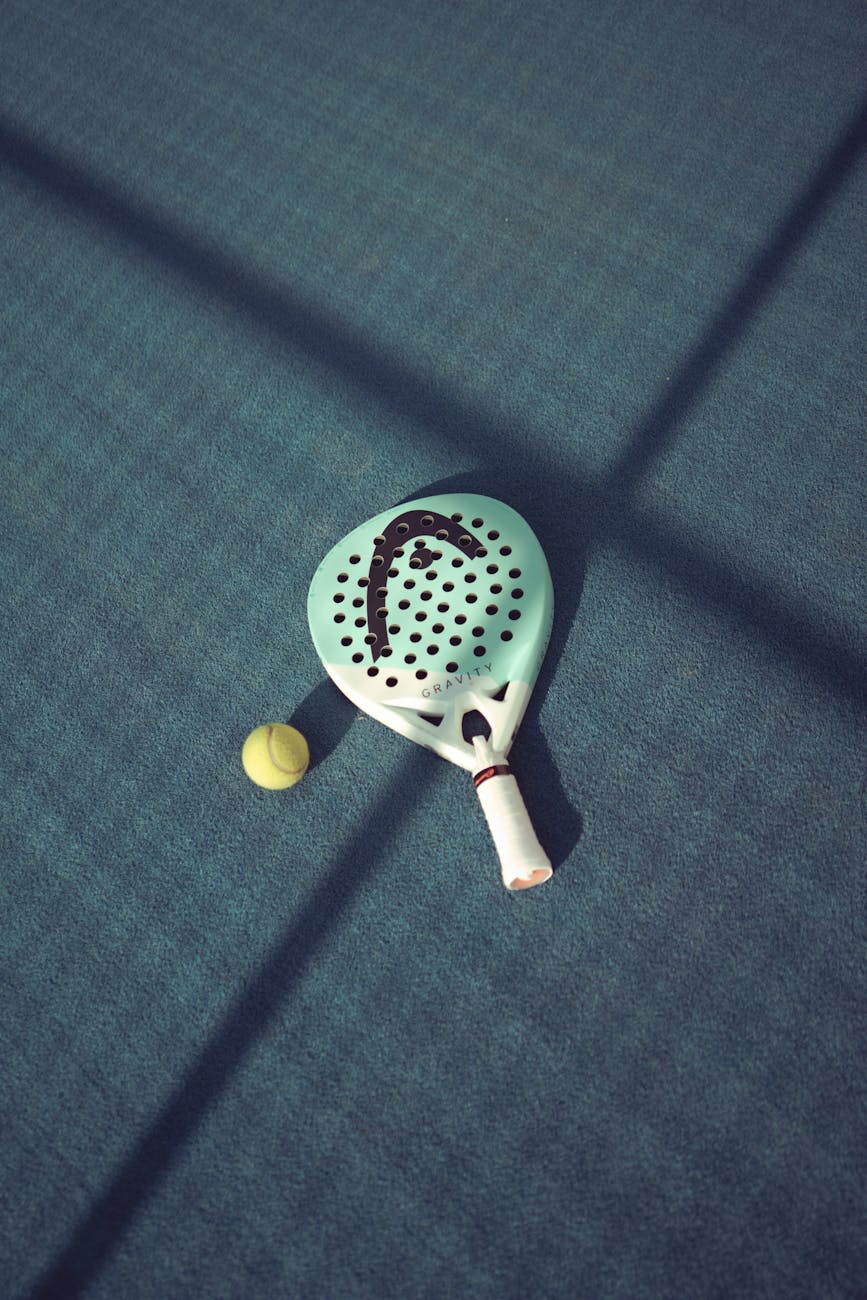
HEAD Padel Pro vs Pro S: which should you buy?
This is the decision that trips up most buyers, so it is worth getting right. The letter S stands for speed, and it changes the ball more than you would expect.
- HEAD Padel Pro (and Pro+) — the control ball. A standard core and pressure give a lower, slower, more forgiving bounce with a longer dwell time on the strings-less face. Ideal for warm weather, indoor clubs, or altitude, and for players who like to construct points rather than overpower them.
- HEAD Padel Pro S (and Pro S+) — the speed ball. A firmer core and higher internal pressure produce a faster, more explosive bounce that cuts through heavy, humid air. This is usually the smarter choice for the UK, where cold, damp outdoor courts sap the life out of a softer ball.
Here is the practical rule we use: if you mostly play outdoors in a British autumn and winter, buy the Pro S / Pro S+. Cold air lowers the pressure inside any ball, and the Pro S is designed to offset exactly that, keeping the bounce crisp when a standard Pro would feel sluggish. If you play indoors or in summer heat, the standard Pro gives you more control and a softer, arm-friendly feel.
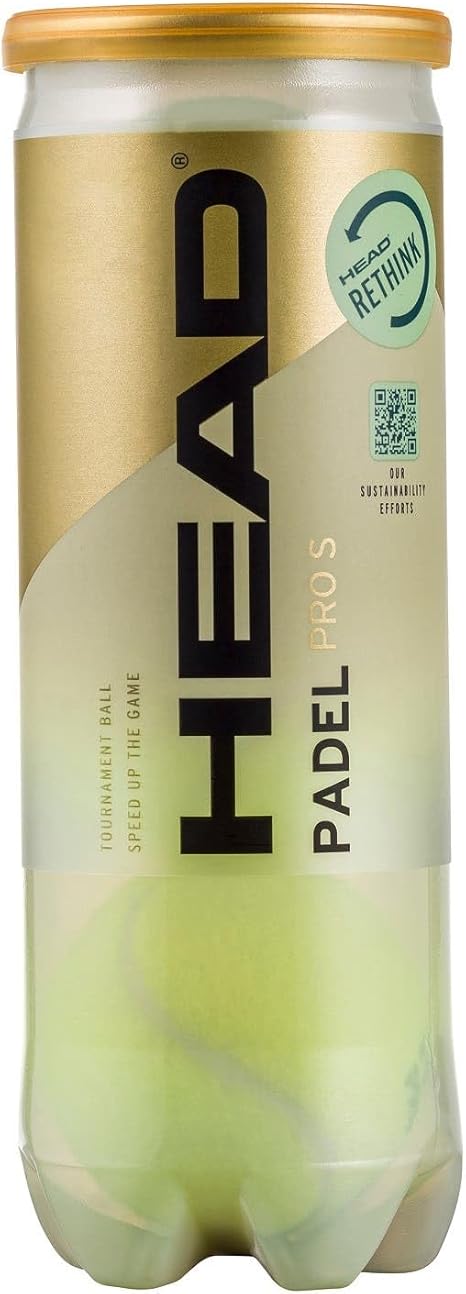
The Pro+ and Pro S+ upgrade
HEAD has refreshed the range with the Pro+ and Pro S+ generation. The headline change is a new core formula that seals in pressure for longer, so the balls stay lively for more sessions before going flat — the single biggest gripe with any pressurised ball. The Pro+ uses a thinner wall for even more touch and dwell, while the Pro S+ has a thicker, springier core for extra power. Both come in HEAD’s “Rethink” packaging, a more recyclable tube made with a chunk of recycled plastic. If you are buying today, these are the versions you will usually find on the shelf, and they are the ones we would pick.
How long do they last?
Be realistic here, because it affects the true cost. Like every pressurised padel ball, the HEAD Pro is at its best for the first two to three intense matches after you crack the seal. After that the internal pressure slowly escapes and the bounce softens — competitive players will notice it well before a casual hitter does. You can meaningfully extend their life by storing opened balls in a pressuriser tube (a Pascal-style ball saver), which keeps them under pressure between sessions and can add several extra playable hours. Buying a 6-ball pack or a club case brings the per-ball cost down if you play a lot.
Buying options and current prices
All of the packs below are stocked and shipped by Decathlon UK (usually within a couple of working days). Prices were correct in July 2026 — click through for the live price.
| Pack | Balls | Best for | Price* |
|---|---|---|---|
| Pro S+ Tri-Pack | 3 | Trying them / cold UK courts | £4.49 |
| Pro+ Tri-Pack | 3 | Control players, warm/indoor | £5.49 |
| Pro S+ 2-Pack | 6 | Regular players stocking up | £9.99 |
| Pro+ Case (24 tubes) | 72 | Clubs & coaches | £109.99 |
*Decathlon UK, July 2026. The tube of three has 150+ reviews at Decathlon and HEAD’s standard three-pack over 500 — among the most-reviewed padel balls the retailer sells.
Pros and cons
Pros
- Genuine tournament pedigree — consistent, predictable bounce out of the tube.
- Durable, high-visibility felt that grips the racket face for spin.
- Two variants let you match the ball to UK conditions (Pro for warm/indoor, Pro S for cold/damp).
- Widely stocked and sensibly priced, with club cases for heavy users.
- Newer Pro+ / Pro S+ hold pressure longer and use more recyclable packaging.
Cons
- Like all pressurised balls, they soften after two to three hard matches — an ongoing cost.
- Pricier than budget or non-pressurised balls; casual players may not need tournament felt.
- Pick the wrong variant (a standard Pro in mid-winter) and it can feel dead — you have to choose deliberately.
- The control-focused Pro can feel slow for big hitters, while the Pro S can feel too lively indoors or in heat.
How it compares and alternatives
The HEAD Pro’s main rivals are the other tournament balls — Bullpadel, Wilson and Adidas all make strong pressurised balls, and for a direct challenger it is worth reading our Wilson X3 padel balls review. If you want to weigh several options side by side, our best padel balls for UK courts 2026 guide and our wider best padel balls round-up both put the HEAD Pro in context against the field.
Balls are only half the equation, of course. If you play HEAD through and through, pairing the Pro balls with the right frame from our best HEAD padel rackets UK 2026 guide makes sense, and it is worth making sure your footwear is sorted too — see our best padel shoes for UK courts.
Verdict
The HEAD Padel Pro earns its status as a default tournament ball. It is consistent, durable, easy to see and it plays the way a serious padel ball should — and the split between a control Pro and a faster Pro S means there is a right answer for almost every court and season. Its only real weakness is one it shares with every pressurised ball: it does not stay fresh forever, so factor in the running cost.
For most UK players our pick is the Pro S+ for cold, damp outdoor courts and the Pro+ for indoor or summer play. Buy the variant that matches where you play, keep a pressuriser tube handy, and you will have a reliable, match-standard ball for a very reasonable price.
Check the latest HEAD Padel Pro price →
Frequently asked questions
What is the difference between HEAD Padel Pro and Pro S balls?
The standard Pro is the control ball: a softer core and lower pressure give a slower, more forgiving bounce that suits warm or indoor courts. The Pro S (“speed”) has a firmer core and higher pressure for a faster, livelier bounce that performs better in cold, damp conditions — which is why it is often the better choice in the UK.
Are HEAD Padel Pro balls good for UK weather?
Yes, provided you pick the right one. For typical British outdoor courts in autumn and winter, the Pro S or Pro S+ keeps its bounce when cold air would otherwise deaden a softer ball. Save the standard Pro / Pro+ for indoor clubs and summer.
How long do HEAD Padel Pro balls last?
A tube plays at its best for roughly two to three intense matches once opened, after which the pressure gradually drops and the bounce softens. Storing opened balls in a pressuriser tube between sessions noticeably extends their playable life.
Are they an official tournament ball?
HEAD was the official ball of the World Padel Tour and its balls are made to FIP (International Padel Federation) specification. The current Pro S+ is the official ball of the International Padel Experience (IPE) circuit, so you are buying a genuine competition-grade ball.
Can I use padel balls and tennis balls interchangeably?
No. Regulation padel balls are a touch smaller and, crucially, run a lower internal pressure than tennis balls, which is what keeps rebounds off the glass controllable. A tennis ball on a padel court bounces too high and puts extra strain on your arm.
1 Comment
Comments are closed.