La Bandeja: The Shot That Defines Padel
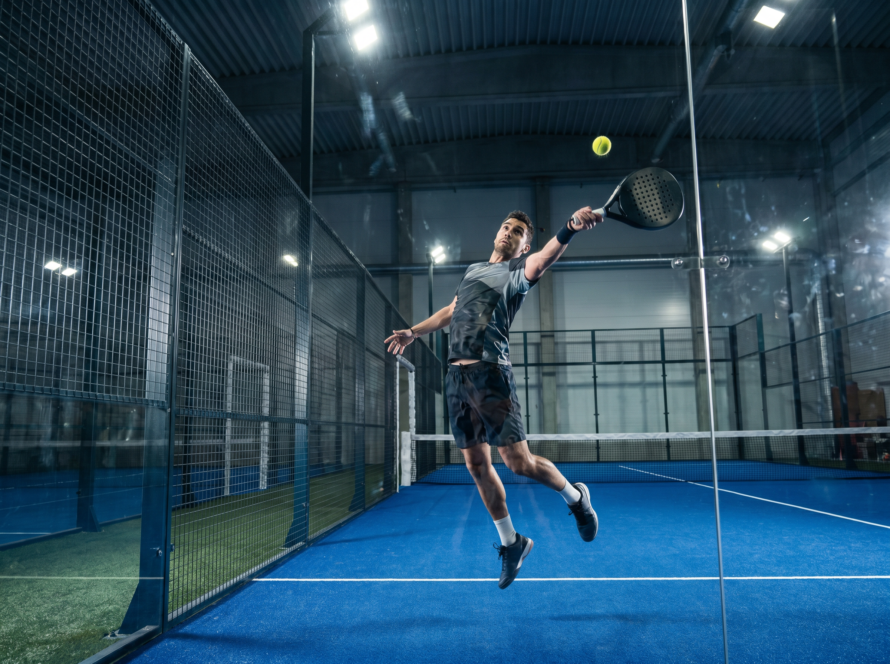
If there’s one shot that separates padel from every other racket sport, it’s la bandeja. This controlled overhead slice is the backbone of high-level padel, allowing you to maintain net position while keeping opponents pinned deep. The name comes from the Spanish word for ‘tray’ — because at the point of contact, your arm position resembles a waiter carrying a tray above their head.
Why the Bandeja Matters
In padel, the net team controls the point. Every time you retreat to hit a lob, you give up that control. The bandeja exists specifically so you never have to retreat. Instead of backing up to let the lob bounce, you take it out of the air with a controlled slice that:
- Keeps you at the net position
- Pushes opponents deep with backspin
- Sets up your next attacking shot
- Uses minimal energy compared to a full smash
Bandeja Technique: Step by Step
Step 1: The Grip
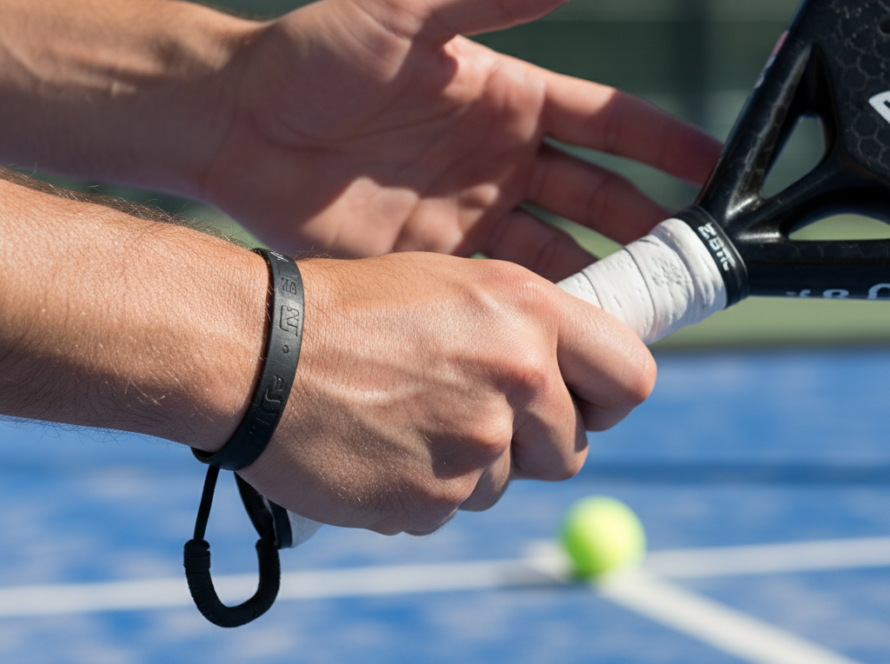
Use a continental grip (hammer grip). This is essential — an eastern or western grip won’t give you the slice angle you need. The continental grip positions your racket face naturally for underspin.
Step 2: Preparation
As the lob comes toward you:
- Turn your shoulders sideways to the net
- Point your non-racket hand at the ball to track it
- Bring the racket up behind your head — not as high as a smash, roughly ear height
- Weight on your back foot, ready to transfer forward
Step 3: The Swing
This is where the bandeja differs dramatically from a smash:
- Swing path: High to low, cutting underneath the ball
- Racket face: Slightly open (tilted upward) to create backspin
- Speed: Medium — this is NOT a power shot. Think 60-70% effort
- Contact point: In front of your body, at roughly head height
- Wrist: Firm through contact, no flicking
Step 4: Follow-Through
The follow-through should be short and controlled, finishing around your hip on the same side. A long follow-through means you’ve swung too hard — the bandeja is about placement, not power.
Step 5: Recovery
Immediately after hitting, return to your net position. The whole point of the bandeja is that you stay at the net. If you find yourself drifting backwards, you’re hitting it wrong.
Where to Aim Your Bandeja
Placement is everything with this shot:
The Deep Centre
The safest and most common target. Aim deep between your opponents, creating confusion about who should take it. The backspin keeps the ball low, making it hard to attack.
At the Feet
If an opponent is moving forward, a bandeja aimed at their feet forces a difficult low return.
The Side Wall Angle
Advanced play: aim the bandeja so it bounces, then hits the side glass. The backspin makes the ball die after hitting the wall, making it nearly impossible to return aggressively.
The Body Shot
Aiming directly at your opponent’s body (especially the hitting shoulder) gives them no angle to work with. It’s not flashy, but it’s effective.
Bandeja vs Smash: When to Choose
| Situation | Bandeja | Smash |
|---|---|---|
| Normal lob, you’re at the net | ✅ Default choice | ❌ Unnecessary risk |
| Short, high lob | ❌ Miss the opportunity | ✅ Go for it |
| Deep lob pushing you back | ✅ Perfect situation | ❌ Too awkward |
| You’re tired | ✅ Energy efficient | ❌ Exhausting |
| Opponents are at the net | ✅ Reset the point | ✅ If you can hit it out |
Common Bandeja Mistakes
- Hitting too hard: The bandeja is a placement shot. If you’re grunting, you’re doing it wrong.
- Too much wrist: A wristy bandeja sprays everywhere. Keep the wrist firm.
- Not enough slice: Without underspin, the ball sits up and your opponent attacks. Commit to the slice.
- Retreating after the shot: Stay at the net. The bandeja’s purpose is to keep you there.
- Wrong grip: Using anything other than continental makes the slice mechanically impossible.
Bandeja Practice Drills
Drill 1: Bandeja Rally
One player lobs, the other hits bandejas. The lobber tries to make the bandeja player retreat. Switch after 2 minutes. Focus on staying at the net.
Drill 2: Placement Targets
Place targets (cones, towels) in different zones. Hit 10 bandejas to each zone. Track your accuracy.
Drill 3: Bandeja to Volley Combination
Hit a bandeja, then immediately look for the weak return to volley away. This two-shot pattern is the bread and butter of padel points.
The Bandeja in Match Play
At amateur level, players smash too much and bandeja too little. At professional level, the bandeja is the most-used overhead shot by far. Take the hint — the best players in the world choose control over power 80% of the time.
For more on developing your overhead game, read our complete smash guide and advanced bandeja techniques.