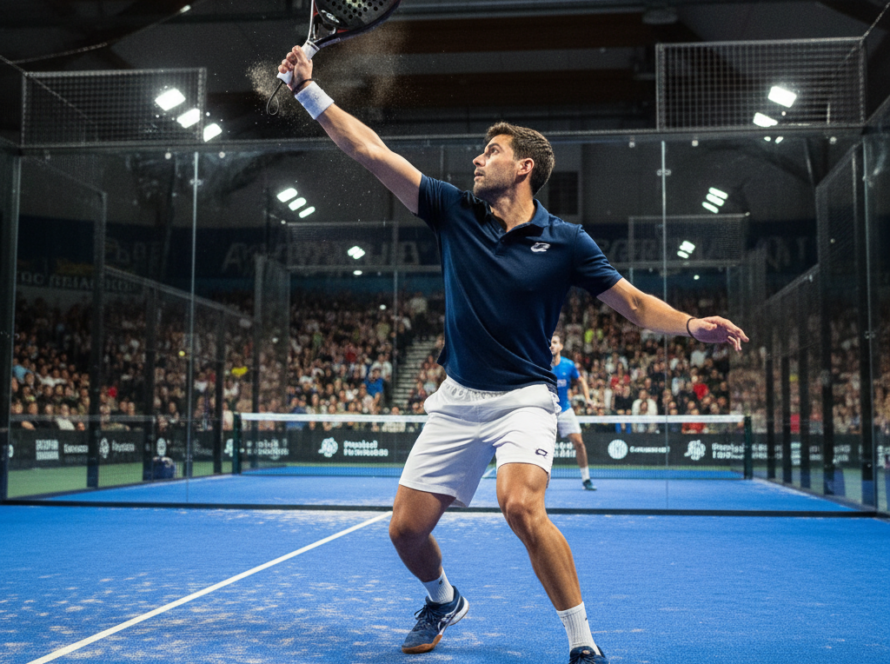
Mastering the Bajada in Padel: Your Ultimate Guide
The bajada, often heralded as one of padel’s most sophisticated and impactful shots, is a game-changer when mastered. Unlike its defensive cousin, the bandeja, the bajada is an offensive weapon, allowing players to turn a seemingly difficult situation into a point-winning opportunity. Executed from the back of the court, typically after the ball has rebounded off the back glass, it demands impeccable timing, precise technique, and a keen understanding of court dynamics. For many, it’s the shot that separates the good players from the truly great.
This comprehensive guide from PadelMad will delve deep into the world of the bajada. We’ll explore its fundamental principles, break down the individual components of its execution, highlight critical tactical scenarios for its deployment, and equip you with the knowledge to refine your technique. Whether you’re a beginner looking to understand this enigmatic shot or an experienced player aiming for greater consistency and power, our expert insights, drills, and tips are designed to elevate your padel game. Prepare to transform your defensive play into aggressive, point-winning action and dominate the court with a perfectly timed and executed bajada.
Table of Contents
- 1. What Is the Bajada?
- 2. When to Use the Bajada (5+ tactical situations)
- 3. Step-by-Step Technique Breakdown
- 4. Forehand vs Backhand Bajada
- 5. Common Mistakes and How to Fix Them
- 6. Practice Drills
- 7. Match Scenarios
1. What Is the Bajada?
The bajada is a formidable offensive shot in padel, often confused with its more defensive counterpart, the bandeja. Derived from the Spanish word for “descent” or “drop,” it perfectly encapsulates the essence of the shot: striking the ball as it descends after rebounding off the back glass. Unlike a groundstroke which is hit from a lower position, or a bandeja which focuses on keeping the ball low and deep to a defensive position, the bajada is an aggressive reply typically executed from the mid-to-back court, aiming for maximum impact. Its primary objective is to reclaim the net, create an immediate advantage, or conclude the point with a winner.
Understanding the bajada begins with differentiating it from other overhead shots. The bandeja (which you can learn more about in our guide: Mastering the Bandeja in Padel) is usually hit with slice, a lower contact point, and is designed to keep opponents pinned at the back of the court, allowing the hitting pair to advance to the net. The bajada, conversely, is often hit with more pace, topspin, or a flatter trajectory, seeking to penetrate the opponents’ defence. The contact point for a bajada is typically higher than a bandeja but still descending, making it a challenging shot to master but incredibly rewarding when executed correctly.
The beauty of the bajada lies in its ability to transform a defensive situation into an attacking one. When an opponent hits a lob that clears your partner and forces you back to the wall, a well-executed bajada can prevent them from gaining control of the net. Instead of merely extending the rally with a defensive shot, you can hit a powerfulbajda that opens up the court, forcing errors or setting up a volleys for you and your partner. This strategic shift is what makes the bajada a true hallmark of advanced padel play, demanding not just technical prowess but also astute tactical awareness.
Key characteristics of a successful bajada include hitting the ball relatively early as it drops from the back wall, generating significant pace, applying spin (topspin or flat usually to drive it down), and directing it with precision to exploit weaknesses in the opponent’s court positioning. It requires players to maintain their court position even when deep, using their movement to set up the shot rather than simply reacting defensively. The bajada is therefore a testament to a player’s ability to remain offensive even when under pressure, making it a crucial skill for anyone aspiring to play padel at a competitive level.
2. When to Use the Bajada (5+ tactical situations)
Knowing what the bajada is merely the first step; understanding when to deploy this powerful shot is where true mastery lies. The bajada is not a default response to every deep ball; it’s a strategically chosen weapon to execute when conditions are optimal. Here are several tactical situations where a well-timed bajada can yield significant advantages:
- Opponents are stranded at the net after a weak lob: This is perhaps the most opportune moment. If your opponents execute a lob that doesn’t quite reach the back glass with sufficient height or depth, leaving them vulnerable at the net, a swift bajada can turn the tables. Aim for their feet or an open space to pass them. The quick descent of the ball makes it incredibly difficult for net players to react, putting them under immense defensive pressure.
- To reclaim net control after being pushed back: When your opponents have successfully lobbed you and your partner off the net, forcing you deep, the bajada serves as your ticket back to an attacking position. Instead of a defensive lob that gives them more time, a strong bajada forces them to defend from deep, allowing you to quickly advance and re-establish net dominance. This is a critical counter-punch that prevents opponents from consolidating their advantage.
-
Pro Tip: Always consider your padel court positioning immediately after hitting a bajada. This aggressive shot should be followed by a rapid advance to the net to maximise its impact and maintain control of the point. Don’t just hit and watch; attack!
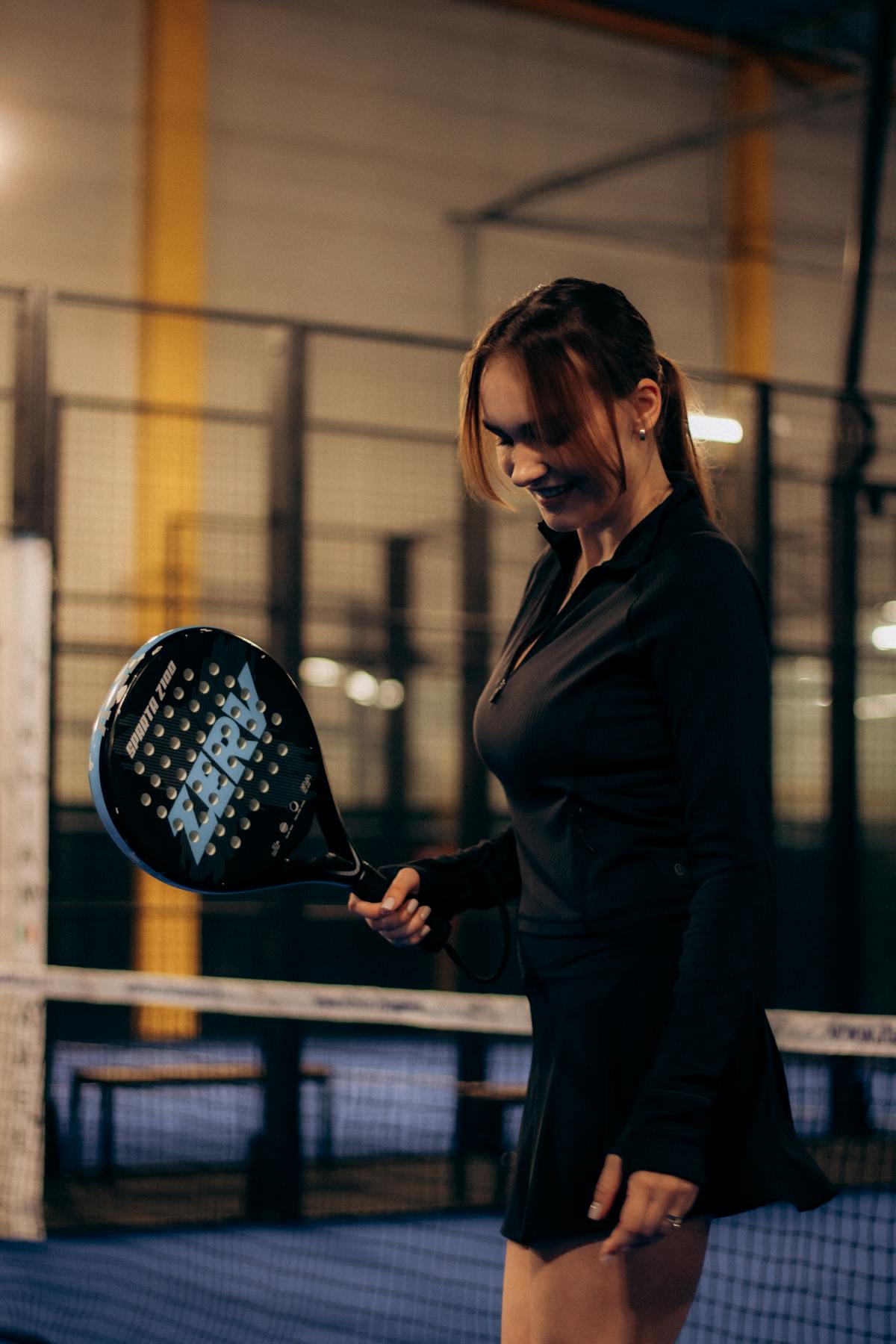
The bajada is one of padel’s most spectacular and effective attacking shots - Against a static opponent in the back court: If one or both opponents are positioned too deep and are slow to anticipate your aggressive shot, a flat or topspin bajada can be devastating. Aim it towards their body or a corner to limit their reaction time and force a weak return, which you can then volley away for a winner. This tactic exploits their lack of movement and preparedness.
- When the ball comes off the back glass with good height and speed: This is about having the luxury of time and a favourable trajectory. If the lob is deep but high, and you have enough time to position yourself well behind the ball, you can set up for a powerful bajada. The descending ball allows you to generate significant racket head speed and drive through the shot, dictating the rally.
- To surprise opponents and change the rhythm: Sometimes, the best use of a bajada is simply to inject pace and aggression into a rally that has become predictable. If you’ve been playing a lot of defensive lobs or bandejas, a sudden, powerful bajada can catch opponents off guard, disrupting their rhythm and forcing them to react to an unexpected offensive play. This element of surprise can often lead to unforced errors.
- Creating angles and opening up the court: A well-angled bajada can be a highly effective weapon. By hitting the ball cross-court towards the side wall or even directly down the middle, you can force opponents into awkward positions, opening up gaps that can be exploited on subsequent shots. This strategy is particularly effective when trying to create space for your partner to finish the point.
Each of these situations demands not just technical proficiency but also a clear tactical mindset. The bajada is a declaration of intent – a commitment to attack. Mastering when and how to wield this weapon will significantly enhance your ability to control points and pressure your adversaries, moving you closer to becoming a complete padel player.
3. Step-by-Step Technique Breakdown
The bajada is a shot of elegance and power, requiring a harmonious blend of footwork, body rotation, racket preparation, and precise contact. Breaking it down into its core components makes this complex shot more approachable:
3.1. Preparation and Footwork
Your preparation begins the moment your opponent lobs the ball. Your first instinct should be to track the ball’s trajectory, moving backwards quickly to get behind it. The goal is to allow the ball to pass you and then rebound off the back glass, creating the space and time needed for the bajada. Unlike an overhead smash where you might jump, for a bajada, you generally want to remain grounded and stable.
- Track the Ball: As the lob travels, assess its depth and height. Anticipate where it will hit the back glass and how it will rebound.
- Lateral Movement: Move swiftly along the baseline, usually using quick shuffle steps or crossover steps, to position yourself directly behind the anticipated contact point. You want to be far enough from the back wall to swing freely but close enough to hit the ball as it descends.
- Open Stance: Adopt an open stance, with your non-hitting shoulder pointing towards the net, allowing for maximum body rotation. Your knees should be bent, and your weight distributed evenly, ready to unleash power.
- Racket Preparation: As you move, bring your racket back early and high. For a forehand bajada, the racket head should be behind your head or shoulder, similar to a serve or smash preparation. For a backhand bajada, the preparation is similarly high and wide. The early preparation is crucial for generating racket head speed.
3.2. The Contact Point
This is arguably the most critical aspect of the bajada. The ball must be struck as it descends after rebounding off the back glass. The ideal contact point is typically above shoulder height but not at full extension, somewhere between a high groundstroke and an attacking smash. This descending trajectory is what allows you to drive the ball downwards with pace and spin.
- Timing is Everything: Wait for the ball to drop slightly. Hitting it too high will turn it into a smash, potentially hitting the net or going too long. Hitting it too low will reduce its offensive power.
- Drive Through the Ball: Impart forward momentum to the ball. Your racket face should be relatively flat or slightly closed (for topspin) as you make contact. Think about driving the ball through the court, not just hitting it over the net.
- Spin Application: Depending on your tactical goal, you can apply topspin (to make the ball dip quickly after the net and bounce high) or hit it flatter (for more penetrating pace). Slice is less common for an aggressive bajada but can be used for variation.
3.3. Body Rotation and Follow-Through
Power in padel comes from the entire kinetic chain, not just the arm. Proper body rotation and a full follow-through are essential for generating maximum power and control.
- Core Engagement: As you initiate the swing, rotate your torso aggressively into the shot. Your hips and shoulders should turn, transferring energy from your lower body through your core and into your arm.
- Weight Transfer: Shift your weight from your back foot to your front foot as you strike the ball. This forward weight transfer adds significant power.
- Full Follow-Through: After contact, allow your racket to continue its natural arc across your body. For a forehand bajada, the racket might finish across your non-hitting shoulder. For a backhand, it would generally finish around your opposite hip. A full follow-through ensures spin and pace are maximised.
- Recovery: Immediately after the follow-through, begin your recovery steps towards the net. The bajada is an attacking shot, and its effectiveness is maximised when followed by an assertive move to regain net control. Neglecting recovery negates much of the shot’s advantage.
Mastering these steps will transform your bajada from an occasional lucky shot into a consistent, devastating weapon in your padel arsenal. Remember, practice and patience are key.
4. Forehand vs Backhand Bajada
While the fundamental principles of the bajada remain consistent – hitting the ball as it descends after the back wall – there are distinct nuances between executing it on the forehand and backhand sides. Understanding these differences is crucial for developing a complete and versatile bajada.
4.1. The Forehand Bajada
Often considered the more natural and powerful of the two for most players, the forehand bajada leverages the body’s natural rotational strength. It shares many characteristics with a powerful forehand groundstroke or a tennis serve, allowing for significant racket head speed and a wide range of spin options.
- Racket Preparation: The racket is typically brought back high, with the racket head pointing upwards, behind the shoulder or head. Think of a powerful throwing motion.
- Body Positioning: An open or semi-open stance is common, allowing for a strong turn of the shoulders and hips. Your chest will generally face the side wall at the peak of preparation.
- Contact Point: Ideally, slightly in front of your body and a little above shoulder height, as the ball descends. This allows you to drive through the ball effectively.
- Spin Options: Players can comfortably generate topspin, flat shots, or even some slice on the forehand bajada. Topspin is excellent for making the ball dip quickly over the net and bounce aggressively.
- Follow-Through: A full, extended follow-through across the body, often finishing around the non-hitting shoulder or hip, is vital for transferring maximum energy and ensuring control.
The forehand bajada is an excellent shot for dominating angles and finishing points. It provides more access to power for most players, allowing them to dictate the pace and direction of the rally with greater authority. Developing a consistent and powerful forehand bajada should be a priority for offensive players.
4.2. The Backhand Bajada
The backhand bajada can be more challenging for many players due to less natural strength and flexibility on that side. However, a well-executed backhand bajada is an incredibly valuable weapon, especially for those who want to avoid relying solely on their forehand. It often requires more precise timing and a slightly different body mechanic.
- Racket Preparation: Similar to the forehand, the racket is taken back high, but the preparation often feels more compact. For a one-handed backhand, the racket head still needs to be high, ready to descend onto the ball. For a two-handed backhand, both hands work together to achieve height and control.
- Body Positioning: A closed or semi-open stance is generally preferred for a one-handed backhand bajada to allow for greater body rotation into the shot. For a two-handed backhand, an open stance can work, with the non-dominant arm providing significant power.
- Contact Point: The contact point for a backhand bajada tends to be slightly further in front and to the side of the body compared to the forehand, allowing for a more effective “punch” through the ball. Still, it’s taken on the descent.
- Spin Options: Topspin can be harder to generate consistently on the backhand bajada for some players, leading to more flat or slightly sliced shots. However, mastering topspin on the backhand opens up incredible attacking angles.
- Follow-Through: The follow-through for a one-handed backhand bajada typically extends towards the net, often finishing across the body. For a two-handed backhand, the follow-through is robust and balanced, ensuring both arms contribute to the shot’s power and control.
Developing both forehand and backhand bajadas will make you a much more unpredictable and dangerous player. While one side might feel more natural, dedicating practice time to both will ensure you have an offensive option regardless of where the ball lands after hitting the back glass. Remember, consistency precedes power – focus on getting the technique right first, then gradually increase pace.
5. Common Mistakes and How to Fix Them (6+ mistakes)
The bajada is a complex shot, and as such, it’s ripe for common errors that can negate its effectiveness. Identifying and correcting these mistakes is paramount to elevating your game. Here are some of the most frequent pitfalls and practical advice on how to overcome them:
- Hitting Too Hard and Losing Control:
- Mistake: Many players, eager to hit a winner, generate excessive power but lack the control to keep the ball in. This often results in the ball flying into the net, hitting the glass, or going out of bounds.
- Fix: Focus on technique before power. Start by hitting bajadas with 70% effort, aiming for consistency and placement. Once you can consistently land the ball where you want it, gradually increase your power. Remember, a controlled bajada deep into the corner is far more effective than an uncontrolled winner attempt.
- Incorrect Timing of Contact:
- Mistake: Hitting the ball too early (as it rises or too high) or too late (after it has dropped too much). Too early often results in hitting the mesh or going long; too late leads to a weak, defensive shot with no penetration.
- Fix: This is a feel-based mistake that requires repetition. Practice tracking the ball’s trajectory intently after it hits the back glass. Visualise the exact moment you want to make contact – as it descends, but still high enough to drive downwards. Drills focusing on ball-feeding from specific back-wall positions can greatly improve timing.
- Insufficient Body Rotation and Weight Transfer:
- Mistake: Relying solely on arm strength instead of engaging the entire body. This leads to a lack of power, reduced control, and increased strain on the arm and shoulder.
- Fix: Emphasise a full shoulder and hip turn during preparation. As you swing, actively rotate your core and transfer your weight from your back foot to your front foot. Think of it as unwrapping your body into the shot. Filming yourself can help identify if your body is rotating sufficiently.
- Not Getting Low Enough:
- Mistake: Standing too upright, which restricts body rotation and forces an awkward upward swing, even on a descending ball. This causes the ball to sail high or lack depth.
- Fix: Bend your knees! From the moment you track the lob, get into an athletic, ready stance with bent knees. This lowers your centre of gravity, allowing for a more natural downward trajectory of your swing and better balance. Dynamic footwork drills can also improve your ability to get into position quickly and efficiently.
- Neglecting Follow-Through:
- Mistake: Stopping the racket swing immediately after contact, which robs the shot of pace, spin, and direction.
- Fix: Ensure a long, extended follow-through. Let the momentum of your swing carry the racket across your body. This not only adds power and spin but also helps maintain balance and prepares you for immediate recovery.
- Poor Court Positioning After the Shot:
- Mistake: Hitting a good bajada but then remaining at the back of the court, allowing opponents to regain net control.
- Fix: The bajada is an attacking shot, and it must be followed by an aggressive advance to the net. As soon as you complete your follow-through, take 2-3 quick steps forward with your partner to reclaim your offensive position. A well-executed bajada is only half the job; the other half is capitalising on the advantage it creates. Refer to our Padel Court Positioning Guide for optimal strategies after an aggressive shot.
-
Warning: Be mindful of hitting the ball too close to the back wall. If you are too deep, you reduce your swing path and risk hitting the glass, which will inevitably lead to a defensive and ineffective bajada. Create space!
- Incorrect Grip:
- Mistake: Using an extreme continental or full Western grip that doesn’t allow for easy adaptation to the high, descending ball.
- Fix: Experiment with a slightly modified continental grip. This grip offers versatility, making it easier to adjust the racket face for topspin or flat shots on both forehand and backhand bajadas.
By systematically addressing these common errors, you’ll find your bajada becoming a more reliable and dangerous weapon, transforming challenging defensive situations into offensive opportunities.
6. Practice Drills (5 drills with difficulty levels)
To truly embed the bajada into your muscle memory and tactical repertoire, consistent and focused practice is essential. These drills are designed to help you master different aspects of the shot, from timing to placement and recovery, with varying difficulty levels.
6.1. Drill 1: The Consistent Back-Wall Drop
Difficulty: Beginner
Setup: One player feeds lobs consistently from the net (or you can use a ball machine) that land deep and bounce off the back glass, allowing for a bajada. The other player (the hitter) starts around the service line.
Execution:
- The feeder lobs a ball deep into the hitting player’s side.
- The hitter moves back, positions themselves, and executes a forehand or backhand bajada.
- The focus is purely on correct form, timing, and getting the ball over the net and deep, without worrying about pace initially.
- The hitter then immediately advances towards the net after each shot.
Focus: Footwork, racket preparation, correct contact point, full follow-through, and immediate net recovery.
6.2. Drill 2: Directional Bajadas
Difficulty: Intermediate
Setup: Two players. One feeder at the net, one hitter at the back. Place cones or targets in various areas of the opponent’s court (e.g., cross-court deep, down the line deep, at the opposing player’s feet).
Execution:
- The feeder sends various lobs to the hitter.
- The hitter practices hitting bajadas to specific targets. Call out the target before each shot, or alternate targets.
- The hitter again recovers to the net after each shot.
Focus: Precision, court awareness, ability to generate angles, and control over shot placement under varying lob trajectories.
6.3. Drill 3: Bajada and Volley Progression
Difficulty: Intermediate
Setup: Two players. One feeder/opponent at the net, one hitter at the back. The feeder acts as an active opponent, returning the bajada. One pair of players against another pair. One pair remains at the net, the other stays at the back, swapping after a set number of points.
Execution:
- The feeder lobs to the hitter.
- The hitter executes a bajada and immediately rushes to the net.
- The feeder (now acting as an opponent) tries to return the bajada, forcing a volley from the now-net-player (the original hitter).
- Play out the point from there, focusing on the transition and follow-up shot.
Focus: Integration of the bajada into live play, quick transition from back to net, and preparation for the subsequent volley. This drill highlights the importance of the bajada as a set-up shot.
6.4. Drill 4: Defensive Lob to Offensive Bajada
Difficulty: Advanced
Setup: Two players/pairs. One pair is at the net, the other in the back. Start with a rally.
Execution:
- The net pair plays offensively, forcing the back pair to defend.
- The back pair aims to hit deep, clean lobs to force the net players back.
- When an opportunity arises (i.e., a lob is catchable for a bajada), the back player hits an aggressive bajada and immediately advances to the net, aiming to swap roles with their opponents.
- The drill continues until a pair successfully takes the net through a bajada.
Focus: Tactical decision-making, identifying bajada opportunities within a rally, executing under pressure, and effective role-swapping to maintain offensive play. This drill develops the ability to switch from defence to attack seamlessly. You can expand on this by reviewing effective Padel Court Positioning.
6.5. Drill 5: The “Pro” Bajada Battle
Difficulty: Advanced
Setup: Two players (or pairs) exclusively focus on lobs and bajadas. Players start at the back of the court.
Execution:
- Players only hit lobs or bajadas.
- The goal is to force an error or an ineffective bajada from the opponent.
- Players must constantly assess the depth and height of the opponent’s lob to determine if they can hit a bajada or if they need to lob back defensively.
- This forces quick decisions and high-level execution of both shots.
Focus: Advanced tactical awareness, precision lobbing, powerful and controlled bajadas, shot selection under pressure, and mental fortitude. This is a demanding drill that mirrors high-level match play scenarios.
Incorporate these drills into your regular practice routine, gradually increasing intensity and complexity. Consistent effort will undoubtedly transform your bajada into a reliable and potent offensive weapon, helping you control the rhythm of the game and win more points.
7. Match Scenarios (4+ situations)
Understanding the bajada’s mechanics is vital, but its true value emerges within the dynamic context of a match. Here, we explore various match scenarios where a strategically deployed bajada can dictate the flow of play, create opportunities, and ultimately secure points.
- Opponent’s Weak Lob (Mid-Court/Short):
Scenario: Your opponents, from the net, attempt a lob that lacks sufficient height and depth, allowing the ball to bounce off the back glass but descend relatively quickly in the mid-court area, not pushing you to the absolute back corner.
Pro Tip: In this situation, the bajada transforms a marginal lob into an immediate opportunity for attack. Opt for an aggressive, topspin bajada aimed at the opponents’ feet or the open cross-court alley. The aim is to force a hurried, defensive volley from them, setting up a decisive follow-up shot for you or your partner. Immediately advance to the net to capitalize on the advantage created. - Forced Back to the Wall, but Seeking to Counter:
Scenario: Your opponents hit a deep, high lob that forces you back to the very corner of the court. While many players might opt for a defensive lob or a bandeja to reset, you identify an opportunity for aggression.
Tip: If you have time and feel balanced, a bajada here can neutralise their net advantage and immediately put them on the back foot. Focus on a deep, controlled bajada with some topspin down the line or cross-court, aiming to pass them or force a weak return. This audacious counter-attack changes the momentum of the point significantly. Ensure your court positioning is spot-on immediately after the shot to transition quickly to attack. - To Draw Opponents Out of Position:
Scenario: Your opponents are playing very defensively, perhaps hugging the back glass, reluctant to approach the net. They are consistently returning your shots with safe lobs or groundstrokes.
Pro Tip: Use a well-placed bajada to force them to react. An angled bajada towards the side wall, or a harder bajada directed at the back corner, can pull them out of their comfort zone. If they manage to return it, they’ll likely be off balance, creating an opening for a cross-court winner or a quick volley near the net. This tactic relies on patience to wait for the right ball and then decisive execution. - Setting Up Your Partner:
Scenario: You’re deep in the court, and your partner is waiting at the net but needs a controllable ball to finish the point. Your opponent lobs, giving you a chance for a bajada.
Tip: Instead of aiming for a winner yourself, hit a controlled, deep bajada cross-court. This drives one opponent back, potentially opening up the court for your partner to intercept a weak return with a volley or smash. Communication with your partner is key here to ensure they anticipate your bajada and are ready to pounce. - Against a Player With a Weak Overhead:
Scenario: You’ve identified that one of your opponents struggles with their overhead shots, perhaps consistently hitting them into the net or against the back glass with no depth.
Tip: While you might primarily target their weakness with lobs, a surprise bajada aimed at that player’s feet or even a sharply angled one can force an uncomfortable return, making them perform an overhead from a difficult position. This keeps them guessing and prevents them from settling into a rhythm.
Each of these scenarios demonstrates that the bajada is more than just a powerful stroke; it’s a strategic tool. Learning when to transform a defensive necessity into an offensive opportunity is a hallmark of an advanced padel player. By dissecting match situations and understanding how the bajada fits within your overarching game plan, you can elevate your tactical awareness and become a more formidable force on the court.
8. Physical Conditioning (5+ exercises)
The bajada, while appearing effortless when executed by professionals, demands a robust blend of physical attributes: explosive power, agility, core strength, and endurance. To consistently perform this aggressive shot and recover effectively, dedicated physical conditioning is non-negotiable. Integrating targeted exercises into your fitness routine will not only enhance your bajada but also elevate your overall padel performance and reduce injury risk.
8.1. Explosive Power and Agility
The speed required to get behind the lob and then launch into the bajada motion necessitates explosive leg power. Agility ensures you can change direction quickly and efficiently.
- Box Jumps (Plyometrics): Stand in front of a sturdy box (start with a low height). Swing your arms and jump explosively onto the box, landing softly with bent knees. Step down. Repeat for 3 sets of 8-10 repetitions. This builds vertical power for quick movements off the back wall.
- Lateral Shuffles with Resistance Band: Place a resistance band around your ankles or knees. Get into an athletic stance (knees bent, chest up). Shuffle laterally, maintaining tension on the band. Perform 3 sets of 10-15 metres in each direction. This targets the abductors and adductors, crucial for quick lateral court coverage.
- Medicine Ball Rotational Throws: Stand with feet shoulder-width apart, holding a medicine ball. Rotate your torso and throw the ball explosively against a sturdy wall (or to a partner). Focus on engaging your core and hips. Perform 3 sets of 8-12 throws per side. This directly mirrors the rotational power needed for the bajada swing.
8.2. Core Strength and Stability
A strong core acts as the powerhouse for all rotary movements, transferring energy from your lower body to your upper body for the bajada. It also maintains balance during dynamic play.
- Plank Variations (Side Plank, Plank with Hip Dips): Hold a standard plank, then progress to side planks (engaging obliques) and planks with controlled hip dips. Hold each position for 30-60 seconds, 3 sets. A strong core increases stability during the aggressive bajada motion.
- Russian Twists: Sit on the floor with knees bent, feet slightly off the ground, holding a weight or medicine ball. Rotate your torso from side to side, touching the weight to the floor next to your hips. Perform 3 sets of 15-20 twists per side. This specifically strengthens the oblique muscles involved in racket swing rotation.
8.3. Endurance and Flexibility
While the bajada is explosive, padel matches often involve sustained periods of high intensity. Good endurance ensures you can maintain quality in your shots throughout the match, and flexibility aids in injury prevention and full range of motion.
- Interval Sprints: Alternate between high-intensity sprints (e.g., 30 seconds) and active recovery (e.g., 60 seconds jogging) for 15-20 minutes. This mimics the stop-start nature of padel and builds anaerobic capacity.
- Dynamic Stretching: Before each training session, incorporate dynamic stretches like leg swings, torso twists, and arm circles. After, focus on static stretches for hamstrings, quadriceps, glutes, and shoulders. This improves range of motion and reduces muscle soreness.
By consistently working on these physical attributes, you’ll not only hit more powerful and consistent bajadas but also transform into a more formidable and resilient padel player overall. Remember, fitness is the foundation upon which skill is built.
9. Mental Game
Padel is as much a mental battle as it is a physical and technical one. The bajada, a shot of offensive intent often born from a defensive situation, particularly highlights the need for a strong mental game. The ability to remain calm under pressure, make decisive choices, and maintain focus can be the difference between a game-changing bajada and an unforced error. Here’s how to sharpen your mental edge for this crucial shot.
9.1. Decision Making Under Pressure
The lob is flying, you’re forced back – do you play a defensive lob, a controlled bandeja, or go for the audacious bajada? This split-second decision is critical.
- Pre-Match Visualisation: Before stepping onto the court, visualise various scenarios – receiving different types of lobs and executing the appropriate response, including the bajada. The more you mentally rehearse, the quicker your brain can process in real-time.
- Read the Game: Develop the ability to quickly assess the situation: where are your opponents? What is the quality of their lob? Do you have time and space for a bajada? A calm and observant mind makes better choices. Don’t be impulsive; make calculated decisions.
9.2. Confidence and Self-Belief
Attempting a bajada often requires courage, especially when the score is tight. Lacking confidence can lead to tentative strokes or defaulting to safer, less effective options.
- Process Over Outcome: Focus on executing the technique correctly (the process) rather than fixating on whether the shot goes in (the outcome). Celebrate good preparation and timing, even if the result isn’t perfect. This builds intrinsic confidence.
- Positive Self-Talk: Replace negative thoughts (e.g., “Don’t miss this one”) with positive, instructional ones (e.g., “Stay low, drive through”). Encourage yourself and your partner.
9.3. Focus and Concentration
The padel court is a dynamic environment. Distractions – from spectators to a missed point – can shatter concentration, leading to errors on shots like the bajada that demand razor-sharp focus.
- Routine Between Points: Develop a consistent routine between points (e.g., adjusting your grip, taking a deep breath, walking to the wall). This helps reset your focus and prepare for the next point.
- External Focus: Instead of dwelling on internal thoughts, concentrate your attention externally on the ball, your opponent’s position, or a specific target. This helps to quiet a busy mind.
9.4. Managing Frustration and Errors
Everyone makes mistakes. The key is how you react to them. A missed bajada can easily lead to a cascade of errors if not managed properly.
- Acceptance and Release: Acknowledge the mistake, learn from it quickly, and then let it go. Dwelling on a bad shot only hinders your performance on the next one. Use a physical cue, like touching your racket strings, to signify releasing a mistake.
- Partner Communication: Use positive communication with your partner. A quick word of encouragement after an error, or a brief strategic chat, can help both of you reset and refocus.
Ultimately, a strong mental game for the bajada – and for padel in general – is about controlling what you can control: your mindset, your effort, and your reactions. By cultivating mental toughness, you’ll not only execute more effective bajadas but also enjoy the game more and achieve greater success on the court.
10. Pro Player Analysis (Coello, Paquito, Galán)
Watching professional padel players execute the bajada is a masterclass in technique, timing, and tactical brilliance. While their innate talent is undeniable, their consistency and precision stem from meticulous practice and a deep understanding of the shot’s mechanics. Let’s analyse how some of the sport’s titans—Arturo Coello, Paquito Navarro, and Alejandro Galán—utilise the bajada to dominate the court.
10.1. Arturo Coello: The Powerhouse Bajada
Arturo Coello, known for his towering presence and immense power, integrates the bajada seamlessly into his aggressive left-side play. His bajada is often characterised by:
- Explosive Reach: Coello uses his significant height and arm span to reach balls that other players might deem unplayable for an attacking shot. He gets behind the ball high, allowing him to drive downwards with incredible force.
- Topspin Dominance: He frequently employs a heavy topspin bajada, particularly cross-court. This makes the ball dip sharply after crossing the net and bite into the glass, making it extremely difficult for opponents to retrieve or generate pace from deep positions.
- Net Transition: After hitting his powerful bajada, Coello sprints to the net, ready to finish the point with a volley or smash, demonstrating the bajada as an effective set-up shot for aggressive follow-up.
Coello’s bajada is a clear statement of intent: to maintain offensive pressure, even when forced to the back of the court. His ability to turn defence into attack with such authority is a key component of his success.
10.2. Paquito Navarro: The Touch and Angle Bajada
Paquito Navarro, a right-side player renowned for his creativity, flair, and exceptional court coverage, showcases a different, yet equally effective, bajada style:
- Variety of Spin and Angles: Paquito doesn’t just rely on raw power. He masterfully uses slice and topspin, often disguising his intent until the last moment. His bajadas are frequently angled, pulling opponents wide or forcing them into awkward positions.
- Anticipation: His incredible anticipation allows him to get into position early, giving him more time to choose his shot and execute it with precision, even on lobs that seem to have him stretched.
- Strategic Placement: Paquito’s bajadas are less about overwhelming power and more about strategic placement. He uses them to open up the court, create imbalances in the opponent’s formation, and set up winning volleys or smashes for himself or his partner.
Navarro’s bajada is a testament to the fact that power isn’t everything; touch, deception, and precise angling can be just as devastating, particularly from the right-hand side of the court.
10.3. Alejandro Galán: The All-Court Aggression Bajada
Alejandro Galán, another dominant left-side player, combines power with aggressive court positioning, making his bajada a constant threat:
- Early Contact: Galán is known for his ability to take the ball early. On a bajada, this means often hitting it slightly higher than typical, almost blurring the line between a bajada and a mid-court smash. This reduces his opponents’ reaction time significantly.
- Risk-Reward Calculation: While aggressive, Galán’s bajadas are calculated. He knows when to go for the outright winner and when to hit a deep, penetrating shot to maintain pressure and set up a subsequent attack.
- Seamless Integration: His bajada is an integral part of his overall aggressive game plan. It’s not an isolated shot but part of a continuous offensive sequence, always followed by an immediate advance to the net.
By observing these elite players, you can gain invaluable insights into the intricacies of the bajada, from the raw power of Coello to the nuanced artistry of Navarro and the relentless aggression of Galán. Incorporate these observations into your own practice and tactical thinking to refine your bajada and elevate your game.
11. Recommended Equipment with Affiliate Links
While the bajada is ultimately a shot of skill and technique, having the right equipment can certainly enhance your ability to execute it with power, control, and consistency. The choice of padel racket significantly influences how the ball feels off the strings and how effectively you can generate power and spin. Here, we recommend a few top-tier rackets that are well-suited for players looking to master their bajada, complete with affiliate links to help you find them easily.
When selecting a racket for offensive shots like the bajada, look for models that offer a good balance of power and control. Rackets with a diamond or teardrop shape, and those with a medium to high balance, often provide the extra leverage needed to drive the ball with authority. Furthermore, a touch of stiffness in the face can improve ball output and responsiveness.
11.1. Bullpadel Hack 04 2026
The Bullpadel Hack 04 2026 is a perennial favourite among power players, making it an excellent choice for those who love to smash and hit aggressive bajadas. Its diamond shape and high balance are designed to give you maximum power on offensive shots. The Tricarbon outer core provides a solid feel and excellent ball output, while the Adaptia inner core adapts to your swing for optimal performance. If you want to feel every bit of power in your bajada, this racket is a strong contender. Check prices on Amazon UK
11.2. Nox AT10 Genius 12K Alum Xtrém 2026
Endorsed by the legendary Agustin Tapia, the Nox AT10 Genius 12K Alum Xtrém 2026 is a versatile racket that offers a superb blend of power and exceptional feel. Its teardrop shape provides a generous sweet spot, and the 12K carbon fiber face delivers precise control for subtle placement, alongside impressive power for those aggressive bajadas. This racket is ideal for players who want to attack with precision and spin, allowing for a highly controlled yet potent bajada. Check prices on Amazon UK
11.3. Head Extreme Pro 2026
For players seeking explosive power without sacrificing too much control, the Head Extreme Pro 2026 is an outstanding option. Its diamond shape and high balance point are engineered for maximum speed and power, making it a weapon in the hands of an aggressive player. The Auxetic technology provides an incredible impact feel and responsiveness, crucial for feeling the ball during a fast-paced bajada. If you aim to hit penetrating bajadas that dictate the point, the Extreme Pro delivers. Check prices on Amazon UK
11.4. Wilson Bela Pro V2
The Wilson Bela Pro V2, designed for Fernando Belasteguín, is a powerhouse racket built for aggressive play. Its diamond shape and firm feel are perfect for players who generate their own power and want to channel it into potent shots like the bajada. The Carbon Fiber Face coupled with Firm EVA Foam provides exceptional control and feel, allowing for both precise angled bajadas and deep, driving ones. This racket truly allows you to feel connected to the ball, making it easier to control aggressive swings. Check prices on Amazon UK
Choosing the right padel racket can be a game-changer for your bajada. Consider these top recommendations as a starting point, and remember to prioritise what feels best in your hand and complements your unique playing style. With the right equipment and diligent practice, your bajada will become an unstoppable force.
12. Frequently Asked Questions (FAQs)
Here are some of the most common questions players ask about the bajada, providing quick answers to help solidify your understanding of this crucial padel shot.
Q: What is a bajada in padel?
A: The bajada (pronounced ‘ba-ha-da’) in padel is an offensive shot hit from near the back wall, typically after the ball has bounced off the back glass. Unlike a bandeja which is hit defensively to keep opponents deep, the bajada is usually hit with more pace, spin, and aggression, aiming to dominate the net or win the point outright.
Q: When should I use the bajada instead of a bandeja?
A: You should use a bajada when you have sufficient time and court position to prepare for an aggressive shot, ideally when the ball is relatively high and falling towards you after hitting the back glass. It’s an attacking shot, whereas the bandeja is more defensive, used to regain net control. If you’re under pressure or off balance, the bandeja is often safer.
Q: What grip should I use for the bajada?
A: While there’s no single ‘correct’ grip, many players find a continental grip (also known as a hammer grip) or a slightly modified continental grip most versatile for the bajada. This allows for easy adjustment between forehand and backhand, and facilitates hitting with topspin or slice, depending on the situation.
Q: How do I practise the bajada on my own?
A: Practising the bajada solo can be done by hitting balls against the back wall, allowing them to bounce and then executing the bajada as they descend. Focus on racket preparation, body rotation, and hitting through the ball. You can also use a ball machine if available to simulate various ball trajectories after the back wall.
Q: What are the most common bajada mistakes?
A: Common bajada mistakes include hitting too hard and losing control, not getting low enough, incorrect timing, failing to rotate the body, and neglecting to follow through. Many players also rush the shot, which leads to poor contact and unforced errors. Overlooking court positioning after the shot is another frequent error.
Q: Which padel rackets are best for hitting bajadas?
A: Rackets with a teardrop or diamond shape, offering a good balance of power and control, are often preferred for bajadas. Brands like Bullpadel, Nox, and Head have excellent options. Ultimately, it comes down to personal preference, but a racket that provides good feel and stability can help execute this powerful shot effectively. For example, the Bullpadel Hack 04 2026 or the Nox AT10 Genius 12K Alum Extrém 2026 are popular choices among advanced players who love to attack.
13. Final Verdict
The bajada is more than just a shot; it’s a statement of intent on the padel court. It’s the moment when a defensive retreat transforms into a calculated offensive strike, allowing you to reclaim the initiative and dictate the rhythm of the game. From its intricate technique to the tactical wisdom required for its deployment, mastering the bajada is a journey that will undoubtedly elevate your entire padel game.
Throughout this comprehensive guide, we’ve dissected every facet of this elegant stroke: understanding its essence, identifying optimal tactical situations, breaking down the step-by-step technique, differentiating between forehand and backhand executions, and highlighting common pitfalls to avoid. We’ve also armed you with practical drills to refine your skills, explored match scenarios where the bajada shines brightest, underscored the vital role of physical conditioning, and touched upon the indispensable mental fortitude required. Finally, we guided you through equipment choices that can complement your aggressive playing style, ensuring you’re well-equipped to unleash your full potential.
Embrace the challenge of the bajada. Practice diligently, observe the pros, and critically analyse your own game. With dedication, this once challenging shot will become a natural and devastating weapon in your arsenal, allowing you to not only compete but truly dominate on the padel court. Go forth and master the descent!