The Volley: Essential Padel Volley Techniques
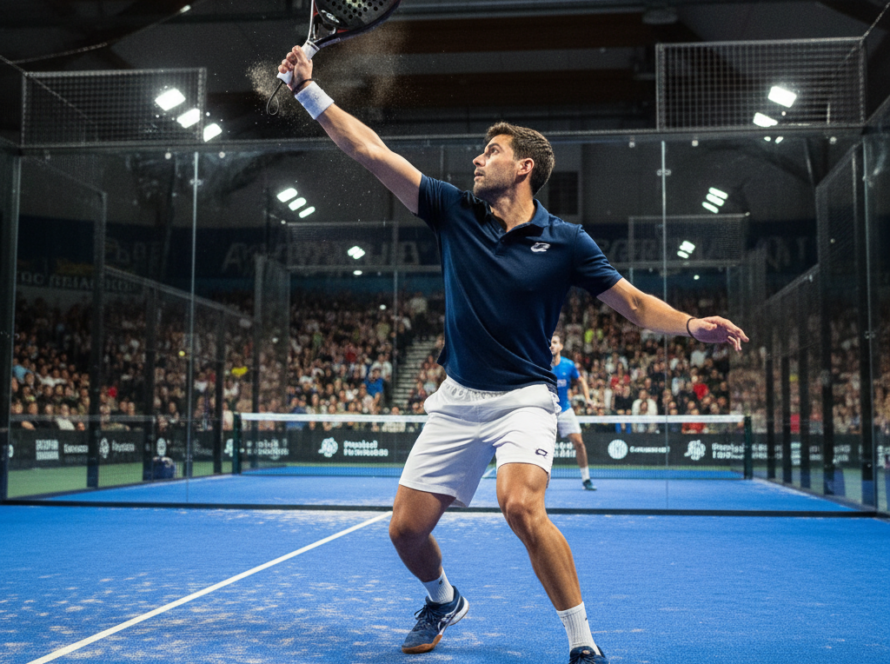
In padel, the net is where points are won. The volley is your primary weapon at the net, and mastering it transforms you from a recreational player to a competitive force. Unlike tennis volleys, padel volleys must account for the glass walls, making touch, placement, and anticipation more important than power.
The Foundation: Ready Position at the Net
Before you can volley effectively, you need the right starting position:
- Stance: Feet shoulder-width apart, knees slightly bent, weight on the balls of your feet
- Racket position: Held at chest height in front of you, head up, continental grip
- Distance from net: Roughly 1-2 metres back from the net — close enough to intercept, far enough to react
- Split step: Every time your opponent makes contact, do a small hop to reset your balance
Types of Padel Volleys
The Punch Volley
The bread and butter of net play. A firm, controlled shot with minimal backswing.
- Technique: Step forward into the ball, punching through with a short, compact swing
- Wrist: Firm and locked — no wrist flick
- Target: Aim deep at your opponents’ feet or into the open court
- When to use: Standard attacking volley when the ball comes at a comfortable height
The Block Volley
When the ball is hit hard at you and there’s no time for a full swing, the block volley is your survival tool.
- Technique: Simply present the racket face and let the ball’s pace do the work
- Grip: Extra firm to absorb the impact
- Angle: Slightly open racket face to lift the ball over the net
- When to use: Defensive situations, fast drives aimed at your body
The Drop Volley
A soft touch shot that dies near the net, forcing opponents to sprint forward from the back of the court.
- Technique: Absorb the ball’s pace by relaxing your grip at contact and opening the racket face
- Follow-through: Almost none — the racket decelerates through the ball
- Target: Just over the net, as close to the net as possible
- When to use: When opponents are deep behind the baseline, especially after a long rally
The Lob Volley
Sometimes the best volley is one that goes up, not forward. The lob volley sends the ball high over your opponents when they’ve pushed forward.
- Technique: Open racket face significantly, brush under the ball with a gentle upward motion
- Height: Aim high enough that opponents can’t reach it, but not so high it’s an easy smash
- When to use: When both opponents rush the net, or to buy yourself recovery time
Wall Play Integration
What makes padel volleys unique is the glass. You must anticipate how the ball will come off the walls:
- Side wall volleys: The ball slows and changes angle after hitting the side glass. Position yourself to take the ball after it rebounds.
- Back wall set-ups: When your shot forces the ball off the back glass, be ready at the net to volley the weak return.
- Reading the angles: The angle of incidence equals the angle of reflection. Practice predicting where the ball will go after hitting glass.
Partner Coordination at the Net
Padel is doubles, and your net positioning must work in tandem with your partner:
- Move as a unit: When your partner moves left, you move left. Maintain roughly 3-4 metres between you.
- Communication: Call “mine” or “yours” early. Hesitation at the net costs points.
- Cover the middle: The gap between you and your partner is the most vulnerable zone. Both players should be ready to cover it.
- Poaching: Crossing to intercept a ball aimed at your partner is a high-risk, high-reward tactic. Only do it if you’re confident in the read.
Common Volley Mistakes
- Too much backswing: Keep it compact. A big backswing means late contact and less control.
- Standing flat-footed: If you’re not split-stepping, you’re too slow to react.
- Aiming for winners every time: Most volleys should be placed, not blasted. Consistency wins points.
- Standing too close to the net: You’ll get lobbed constantly. Stay 1-2 metres back.
- Ignoring the low volley: Balls at your feet are the hardest to handle. Practice bending your knees and getting low.
Volley Drills
Drill 1: Partner Volley Exchange
Both players at the net, volleying back and forth. No bounces allowed. Start at half pace and gradually increase speed. Aim for 20 consecutive volleys.
Drill 2: Two-on-One Pressure
Two players at the baseline hitting at one player at the net. The net player must return everything with volleys. Builds reaction time and stamina.
Drill 3: Drop Volley Touch
Partner feeds balls from mid-court at varying speeds. You must drop volley everything into the service box. Develops soft hands and feel.
Drill 4: Random Feed Reaction
Partner alternates between hard drives, soft dinks, and lobs. You must choose the right volley type for each ball. Develops decision-making under pressure.
Equipment Tips for Better Volleys
Control-oriented rackets with a round or teardrop shape excel at the net. The sweet spot is larger and more forgiving, which matters when you’re reacting to fast shots. Check our best padel racket guide for recommendations.
The volley is the foundation of winning padel. Master these techniques, drill them regularly, and you’ll find yourself dominating the net and winning more points than ever. For smash technique to complement your net game, see our complete smash guide.