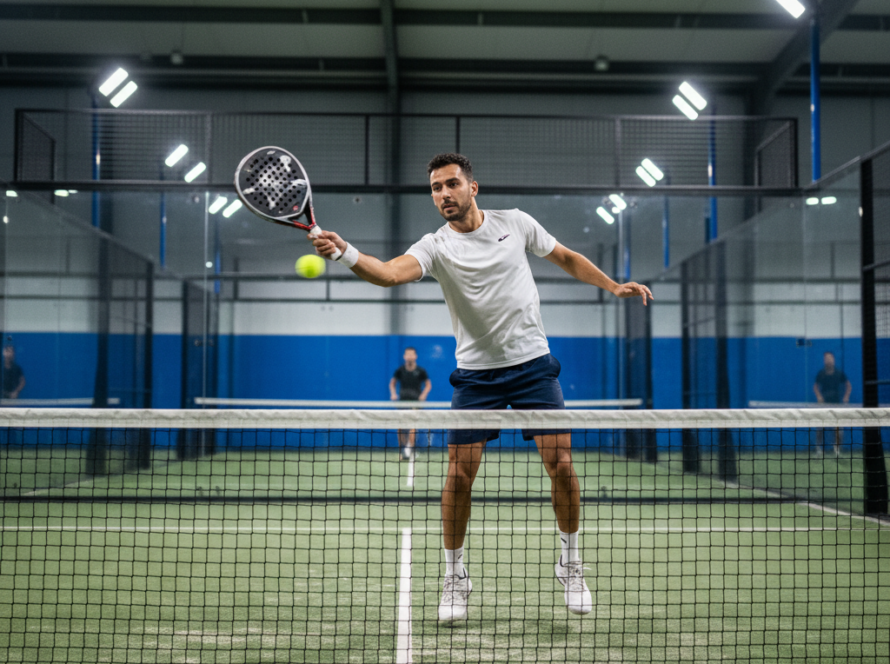
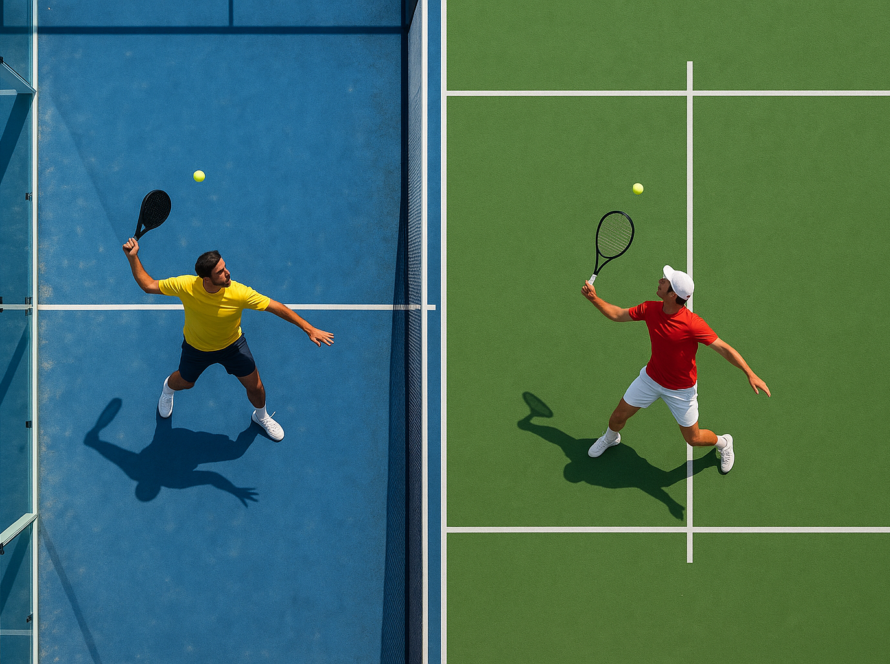
The Smash: Your Complete Guide to Padel’s Most Powerful Shot
The smash is the most aggressive and spectacular shot in padel. Unlike tennis, where a smash typically ends the point, in padel the walls add complexity — making shot selection, angle, and spin just as important as raw power. This guide covers every type of smash and when to deploy each one.
Types of Padel Smash
The Flat Smash (Remate Plano)
The flat smash is pure power. Hit with minimal spin, the goal is to drive the ball so hard into your opponent’s side that it bounces off the back glass and flies over the cage — an automatic point winner.
- Contact point: High and in front of your body, arm fully extended
- Racket face: Square to the target at impact
- Target zone: Aim for the back third of the court, between the service line and back wall
- When to use: When the lob is short and high, giving you time to set up. Best used when opponents are deep in the court.
The Vibora
The vibora (Spanish for ‘viper’) is a side-spin smash that curves away from your opponent after bouncing. It’s devastating because the spin makes the ball kick unpredictably off the glass.
- Grip: Continental, with the wrist pronating sharply at contact
- Contact: Slightly to the side of the ball, brushing across it
- Spin: Heavy side-spin, making the ball curve and kick off the glass
- When to use: When you want to maintain net position while still putting pressure on opponents. The vibora lets you hit aggressively without overcommitting.
The Bandeja
The bandeja is padel’s signature shot — a controlled overhead slice that keeps you at the net while pushing opponents back. It’s not about power; it’s about positioning and control. For a deep dive, see our complete bandeja guide.
- Technique: Slice under the ball with a continental grip, keeping the ball low
- Speed: Medium pace — this is a tactical shot, not a power shot
- Purpose: Maintain net position, keep opponents deep, set up the next shot
The Kicking Smash (Por Tres / X3)
The por tres (literally ‘by three’) is the ultimate point-ending smash. The ball bounces in the court, hits the back glass, then flies over the side fence — three bounces, hence the name. This is the shot that makes crowds gasp.
- Technique: Extreme topspin combined with power, hitting the ball with a sharp upward brush
- Contact: High and slightly behind the ball to generate the topspin
- Target: Deep into the corner where the back wall meets the side wall
- Difficulty: Very high — this requires excellent timing and significant practice
Choosing the Right Smash
Shot selection is what separates good players from great ones. Here’s a decision framework:
High, Short Lob + Opponents Deep
Go for the flat smash or por tres. You have time to load up, and the ball will likely bounce over the cage.
Medium-Height Lob + Need to Hold Net
Choose the bandeja. Don’t try to be a hero — the bandeja keeps you in control of the point.
High Lob + Opponents at Net
The vibora is perfect here. The side-spin will make the ball difficult to handle even if they read the shot.
Behind You / Awkward Position
Always default to a bandeja or defensive lob. Trying a flat smash from a poor position is the fastest way to lose the point.
Common Smash Mistakes
- Smashing everything: Not every overhead ball needs to be smashed. The bandeja exists for a reason.
- Ignoring the walls: A flat smash straight into the back wall is easy to return. Use angles.
- No split step: Always split step before moving to the ball. This gives you balance and options.
- Dropping the elbow: Keep your elbow high throughout the swing. A dropped elbow kills power and accuracy.
- Not watching the ball: Track the ball all the way to your racket. Many mishits come from looking at the target too early.
Smash Drills to Practice
Drill 1: Lob and Smash Rally
One player lobs, the other smashes. Alternate every 10 balls. Focus on footwork and contact point rather than power.
Drill 2: Target Practice
Place cones or towels in the corners of the court. Practice directing your smashes to specific zones. Keep score to make it competitive.
Drill 3: Vibora vs Bandeja Decision Making
Have a partner feed random lobs — some high, some low, some deep, some short. You must choose the appropriate shot in real time. This develops game awareness.
Drill 4: Por Tres Practice
Feed yourself high balls from mid-court. Focus on generating heavy topspin and targeting the back corner where the glass meets the fence. Count how many go over the cage.
Equipment Considerations
Your racket choice affects your smash. Power-oriented diamond-shaped rackets like the Babolat Viper generate more smash power, while control-oriented round rackets offer better bandeja precision. For an overview of options, see our Best Padel Rackets 2026 guide.
Final Thoughts
The smash is not one shot — it’s a family of shots, each with specific uses. The best padel players don’t just hit the biggest smash; they pick the right smash for every situation. Master the bandeja first, add the vibora, then work on the flat smash and por tres. Your opponents will thank you for the warning — and then stop thanking you when they can’t return anything.
For more technique guides, explore our volley guide and court positioning guide.
Compare prices and read customer reviews