Coming to Padel from Tennis? Here’s What to Expect
Padel is the fastest-growing racket sport in the world, and a huge proportion of new players are coming directly from tennis. It’s easy to see why — the scoring system is the same, the competitive format is recognisable, and many of the fundamental movement patterns overlap. But there are also some significant differences that can catch tennis converts off guard in their first few sessions.
This guide covers everything a tennis player needs to know before stepping onto a padel court for the first time — or for anyone curious about how the two sports compare before choosing which one to try.
The Court: Walls, Glass, and Enclosed Space
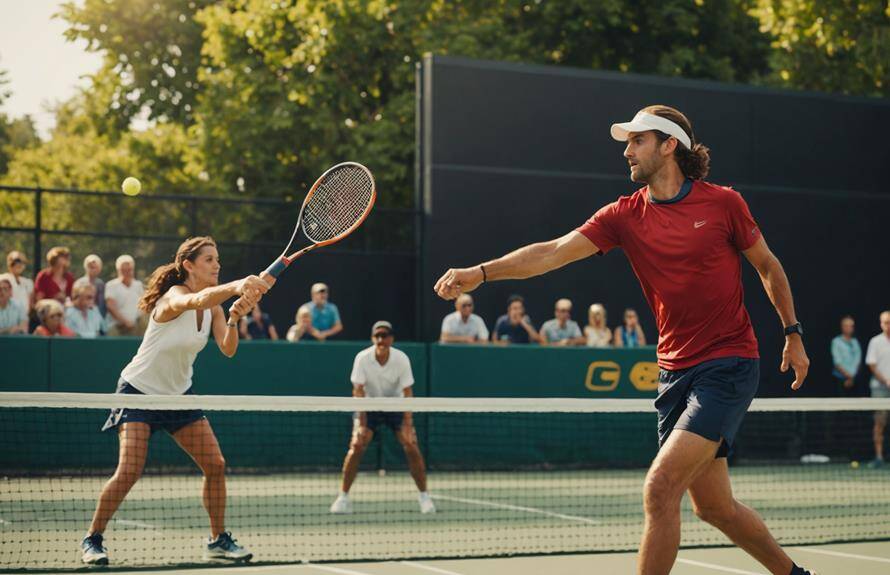
The most obvious difference between padel and tennis is the court itself. A standard padel court is 20 metres long and 10 metres wide — roughly a third the size of a tennis court (which measures 23.77m x 8.23m for doubles). The padel court is entirely enclosed by a combination of solid walls (typically at the ends) and glass panels (along the sides), creating a contained playing environment.
This enclosure is not just aesthetic — it’s fundamental to how the game is played. Balls that hit the glass walls remain in play, and using the glass strategically is a core skill of padel. A ball can bounce off the floor and then the back wall and still be returned legally, which creates the extended rallies that make padel such an exciting spectator and participation sport.
In tennis, walls play no role whatsoever — a ball that goes beyond the baseline or sideline is simply out. In padel, that same ball might bounce, hit the glass, and come back into play at an unpredictable angle.
Scoring: Familiar System, Different Service Rules
Padel uses exactly the same scoring system as tennis: 15, 30, 40, deuce, advantage, game, set, match. Sets are typically played to six games with a tiebreak at 6-6, and matches are usually best of three. For tennis players, the scoring system requires zero adjustment.
Where padel diverges is in the serve. In tennis, you serve overhead with significant pace and spin. In padel, the serve is underarm and must be struck at or below waist height after bouncing the ball once on the ground behind the service line. The serve must land diagonally in the opponent’s service box — identical in principle to a tennis serve, but the execution is completely different.
You also only have two chances to get the serve in (first and second serve, as in tennis), but because padel serves are underarm and relatively slow, the serve advantage is much less pronounced than in tennis. Padel matches are rarely decided by service dominance — it’s far more about the patterns of play and use of the glass.
Serving Rules in Detail
The padel serve is one of the first things tennis players need to learn, and it’s deceptively technical despite its apparent simplicity:
- Stand behind the service line on the right side of your half for the first point (deuce side)
- Bounce the ball once on the ground within your service box
- Strike the ball at or below waist height — you cannot toss the ball up and strike it overhead
- The ball must travel diagonally and land in the opponent’s service box on the other side of the net
- The ball must not hit the side glass before landing in the service box
- The serve alternates sides each point, just as in tennis
For tennis players used to generating aces with 120mph+ serves, the padel serve feels almost anticlimactic at first. But learning to slice, kick, or angle your padel serve effectively becomes an interesting technical challenge in its own right.
Equipment: Solid Racket vs Strung Racket
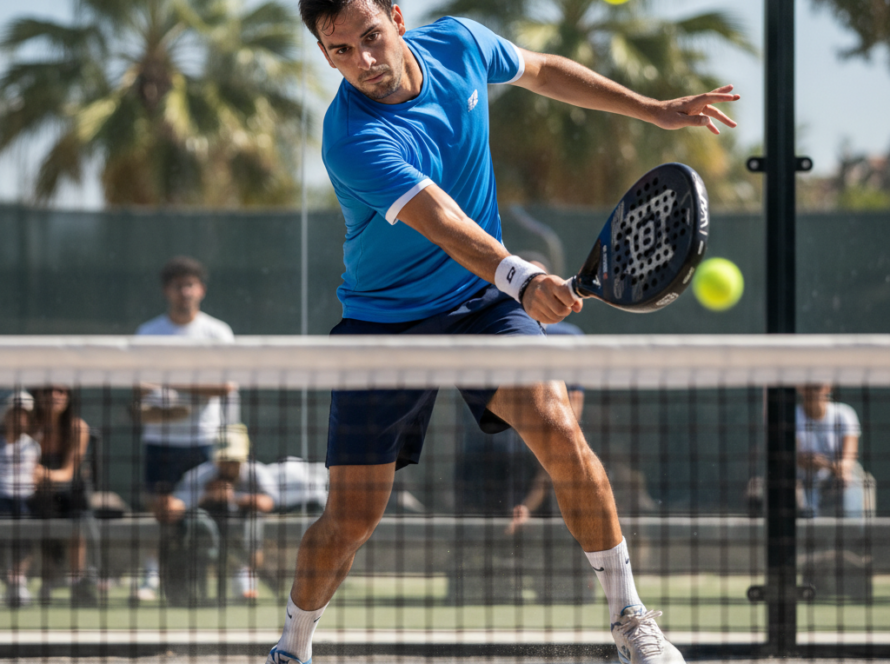
The equipment difference between padel and tennis is substantial. Tennis rackets are strung with strings that generate power and spin through string deformation. Padel rackets are solid — no strings whatsoever. Instead, the face is made from fibreglass or carbon fibre and is perforated with small holes to reduce air resistance.
Padel rackets are also considerably shorter than tennis rackets. A tennis racket has a maximum length of 73.66cm; a padel racket must not exceed 45.5cm in length and 26cm in width. The shorter, solid nature of the padel racket means the playing feel is entirely different — more like a ping pong paddle than a tennis racket in some respects, though the dynamics of the sport produce much longer rallies than table tennis.
Padel balls look almost identical to tennis balls but are slightly less pressurised. This produces a lower, more predictable bounce — which is important given that the enclosed court and glass walls already create significant variability in ball trajectory.
Doubles Focus vs Singles Option
Tennis is commonly played in both singles (one vs one) and doubles (two vs two). Padel is almost exclusively a doubles sport — the standard game always features four players, two on each side of the net. The court is too small for competitive singles padel (the enclosed glass walls create too many advantages for the net player), and while singles padel is occasionally played socially or in training drills, it’s not an official competitive format.
For tennis players who primarily play singles, this is a significant cultural shift. Padel is inherently social — you always need at least three other players to have a proper game. Most padel clubs actively encourage social mixing and ladder systems that pair players of similar abilities together, which many converts find they enjoy enormously.
The Physical Demands: Rallies, Reflexes, and Less Running
Tennis, particularly singles, involves covering significant ground — sprinting corner to corner, tracking down deep shots, and recovering to a central position between points. Padel’s smaller court means you cover less ground per shot, but the enclosed format and use of the walls creates longer rallies with more frequent ball contact. Where a tennis point might last 3-4 shots at club level, a padel point often extends to 10, 15, or more exchanges.
Padel places a premium on:
- Reflexes and reaction time — volleys and glass-wall rebounds require fast hands and quick reading of the ball
- Explosive lateral movement — short, sharp side-to-side sprints are more common than the long baseline runs of tennis
- Tactical awareness — with four players in a relatively small space, positioning and court awareness are crucial
- Consistent groundstrokes — because the ball stays in play longer, consistency matters more than outright power
Padel vs Tennis: Side-by-Side Comparison
| Category | Padel | Tennis |
|---|---|---|
| Court Size | 20m x 10m (enclosed) | 23.77m x 8.23m (doubles) — open |
| Walls | Glass and solid walls in play | No walls — out of bounds |
| Scoring | 15, 30, 40, deuce — identical to tennis | 15, 30, 40, deuce |
| Serving | Underarm, waist height, bounce first | Overhead, no bounce, high pace |
| Racket | Solid, perforated, max 45.5cm | Strung, max 73.66cm |
| Format | Doubles only (standard) | Singles and doubles |
| Ball | Lower pressure, similar to tennis ball | Higher pressure |
| Key Skill | Reflexes, glass reading, positioning | Serve, groundstrokes, court coverage |
The Learning Curve: Which Is Easier?
This is the question most tennis players ask — and the honest answer is nuanced. Most people find padel easier to enjoy from day one. The underarm serve takes the pressure off immediately, the smaller court keeps the ball in play more consistently, and the glass walls add a safety net that allows beginners to stay in rallies they’d never reach in tennis.
However, padel has a long mastery curve. The glass wall skills, the vibora, the bandeja, the strategic use of lobs and volleys in a four-player format — these take years to develop. So padel is easier to start, and equally challenging to master as tennis. The best players in the world have been playing for decades.
For a tennis player, the first few sessions of padel will feel familiar — your footwork, spatial awareness, and competitive instincts all transfer. Within a few weeks, you’ll almost certainly be playing proper competitive games. And then you’ll spend the next several years trying to perfect your vibora and your glass-reading abilities.
Best Padel Rackets for Tennis Converts
If you’re coming from tennis, these rackets offer the right blend of familiarity and padel-specific performance:
HEAD Evo Extreme — A great all-rounder with a teardrop shape that rewards the attacking instincts of tennis players while remaining forgiving enough for beginners. Find on Amazon UK →
Babolat Air Viper — Babolat’s padel range draws heavily on their tennis heritage, and the Air Viper is perfectly pitched for athletic tennis players picking up padel. Comfortable, well-balanced, and forgiving. Find on Amazon UK →
Bullpadel Flow — For tennis players with a bit of natural power who want to hit through the ball, the Bullpadel Flow’s teardrop shape and quality construction makes it an ideal step-up racket. Find on Amazon UK →
Frequently Asked Questions
Is padel easier to learn than tennis?
Most people find padel easier to pick up than tennis. The smaller court, underarm serve, and glass walls mean rallies develop quickly and beginners can enjoy real competitive games much sooner than in tennis. However, mastering padel at a high level takes just as long — the technical and tactical depth is significant.
Can tennis players play padel?
Yes — tennis players often find the transition to padel very natural. The scoring system is identical, and many technical skills like volleying, movement patterns, and reading pace transfer well. The main adjustments are the underarm serve, learning to use the glass walls, and adapting to a solid racket with no strings.
Is padel always played in doubles?
Padel is primarily a doubles sport — the standard competitive format is always four players (two per side). Singles padel exists but is considered informal and rarely played. Tennis, by contrast, is commonly enjoyed in both singles and doubles formats.
Do padel and tennis use the same balls?
Padel balls look very similar to tennis balls but have slightly lower internal pressure, which produces a lower, more controllable bounce. They are not officially interchangeable — using tennis balls on a padel court makes the game considerably harder to control due to the higher bounce.
How is serving different in padel vs tennis?
In tennis, you serve overhead from behind the baseline with significant pace. In padel, you serve underarm from behind the service line — you must bounce the ball once on the ground then strike it at or below waist height. The ball must land diagonally in the opponent’s service box, similar to tennis in structure but completely different in execution.
Is padel more physical than tennis?
Padel and tennis place different physical demands on players rather than one being more intense than the other. Padel produces longer rallies with more frequent contact, requiring sharp reflexes and explosive lateral movement. Tennis singles involves more ground coverage per point. Both sports provide excellent fitness benefits — the right choice depends on the physical style you enjoy most.