What Is the Vibora?
If you’ve watched padel at any competitive level — whether it’s World Padel Tour professionals or the better players at your local club — you’ve almost certainly seen the vibora without knowing its name. It’s the overhead shot that seems to vanish sideways, catching opponents off-guard and producing those gasps of disbelief that make padel so addictive to watch and play.
The vibora (Spanish for “viper”) is a flat, aggressive attacking overhead that’s designed to exit through the side glass of the court rather than the back wall. Unlike a conventional smash, which drives the ball hard into the back glass and produces a predictable high bounce, the vibora uses a sharp wrist snap to redirect the ball steeply and laterally, making it extremely difficult to read and even harder to return.
It is, without doubt, one of padel’s most deceptive and effective weapons. And with the right coaching, the right drills, and the right racket, it’s a shot you can develop. This guide covers everything you need to know.
For broader gameplay development, explore our gameplay category and our dedicated gameplay tips section.
When to Use the Vibora
Understanding when to deploy the vibora is just as important as knowing how to execute it. The shot is most effective in these situations:
- You’re in an offensive position at or near the net — the vibora is an attacking shot and requires you to be well-positioned to attack high balls
- The ball is above your head — ideally at a comfortable overhead height where you can fully wind up and snap through the ball
- Opponents are out of position — targeting the side glass when opponents are bunched centrally leaves them with almost no time to react
- You want to attack the side line — the vibora is particularly potent when directed cross-court at the side glass on your forehand or backhand overhead side
- You want to break the opponent’s rhythm — even if the vibora doesn’t win the point outright, the unpredictability forces errors and creates openings
Avoid attempting the vibora when you’re on the defensive, when the ball is at an awkward height (around shoulder level), or when you haven’t had time to set your feet and prepare properly. A mistimed vibora often results in an easy ball for your opponents or a shot into the net.
The Vibora Technique: Step by Step
1. The Grip
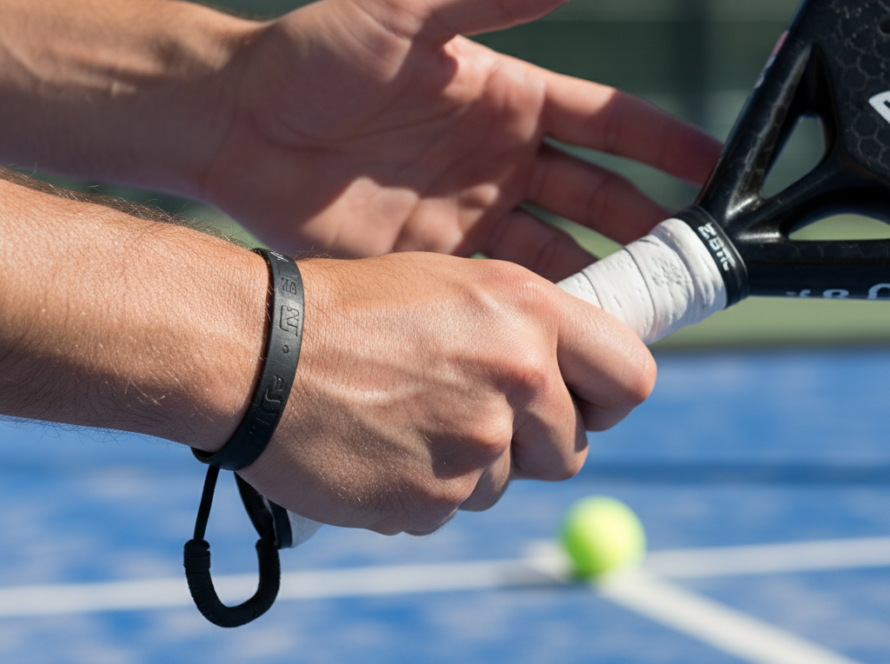
The continental grip is the foundation of the vibora. Hold the racket as if shaking hands with the frame — your index knuckle should sit on the top bevel of the handle. This neutral grip position allows the wrist freedom to snap through the ball at the critical moment of impact, which is what generates the vibora’s characteristic pace and angular deviation.
Some advanced players use a slight Eastern grip variation, but for most developing players the continental is the most reliable starting point. If you’re unsure whether you’re holding the racket correctly, ask a coach or an experienced club player to check your grip before developing muscle memory around an incorrect one.
2. The Stance and Positioning
Position yourself side-on to the net with your non-dominant shoulder pointing roughly towards the target area. Your feet should be shoulder-width apart, with your weight initially on your back foot. This coiled, side-on position is crucial — it creates the rotational energy that you’ll unwind through the ball.
Good footwork is non-negotiable for the vibora. You need to get in position early — ideally before the ball reaches its peak — so that you’re waiting for the ball rather than scrambling to reach it. Players who rush their footwork invariably rush the swing and lose the wrist snap that makes the shot effective.
3. The Backswing
As the ball rises, bring your racket back in a smooth, compact arc. Your elbow should be high and your racket head pointing upward. Think of it like the cocking position in a throwing motion — you’re loading energy into the shoulder and arm. Avoid taking too long a backswing, as this slows down the swing speed and makes the shot easier to read.
4. The Swing Path and Impact
This is where the vibora diverges from a conventional smash. Rather than swinging straight through the ball, you’re swinging across it — from outside to inside — creating a slightly flat, cross-body motion. The racket face should be slightly open at impact, and you’re aiming to contact the ball slightly in front of and to the side of your body.
The swing is fast and compact. Think of it as a controlled whip rather than a full-power swing. The speed comes from the wrist and forearm rotation, not from a full-body lunge. Many players who struggle with the vibora are trying to hit it too hard — the shot works through redirection and deception, not raw power.
5. The Wrist Snap
The wrist snap is the signature element of the vibora and the hardest part to master. At impact, you rotate your forearm inward and snap your wrist sharply across the ball. This creates the sharp lateral movement that makes the shot so difficult to read. The ball appears to be heading one way and then suddenly angles steeply into the side glass.
Developing consistent wrist snap requires repetition. Start slowly with a partner feeding you easy overhead balls and focus purely on the wrist action before adding pace. Once you can reproduce the snap reliably, gradually increase the pace of the feed.
6. The Follow-Through
After contact, your racket should follow through across your body — finishing on the opposite side from where you started the swing. A good follow-through keeps the swing compact and controlled and ensures you haven’t tried to muscle the shot. If your follow-through is messy or abbreviated, it usually means you’ve tried to hit too hard or mis-timed the wrist snap.
Vibora vs Smash vs Bandeja: Understanding the Differences
The Smash
The padel smash is the most aggressive overhead — you drive the ball hard into the back glass with full-body rotation. It’s designed to generate a high, fast bounce that jumps over the opponents or forces them into a scrambled defensive position. The smash is read more easily than the vibora because the swing and direction are more predictable, and skilled defenders can set up for the bounce off the back glass.
The Bandeja
The bandeja (Spanish for “tray”) is a sliced, controlled overhead that lets you stay near the net while keeping the ball in play. You slice under the ball with a slightly open face, sending it deep with topspin and high bounce. The bandeja is about maintaining offensive position, not winning the point outright. It’s generally the first overhead technique beginners should master.
The Vibora
The vibora sits between the smash and the bandeja in terms of aggression. It’s more deceptive than a smash and more attacking than a bandeja. Use it when you have a good offensive position and want to win the point without resorting to raw power. The vibora is particularly effective against opponents who have positioned themselves well to defend against smashes into the back glass.
4 Practice Drills to Build Your Vibora
Drill 1: Shadow Swings
Before touching a ball, practise the vibora motion with shadow swings. Stand at the net position, adopt the continental grip, and perform the swing sequence slowly — backswing, forward swing, wrist snap, follow-through. Do this 20 times on each side, focusing on the wrist rotation at impact. Gradually increase speed as the motion becomes comfortable.
Drill 2: Stationary Feed
Have a partner stand at the back of the court and lob balls gently to your overhead position. Start with slow, high feeds so you have plenty of time to set your feet and prepare. Focus on executing the wrist snap correctly rather than the outcome of the shot. Don’t worry where the ball goes initially — just focus on the feel of the snap.
Drill 3: Directional Vibora Practice
Once you’re making consistent contact, start aiming for specific sections of the side glass. Mark a target with tape or use the panel joints as visual guides. Try to hit the lower section of the side glass — shots that exit low off the glass are hardest to return. This drill develops both technique and shot direction simultaneously.
Drill 4: Live Point Situations
Set up point scenarios where you start at the net in an offensive position. The rally begins with the opponent lobbing to you, and you must attempt the vibora. Play the point out fully. This replicates match conditions and forces you to execute under pressure, which is where the shot must ultimately work. Start with cooperative partners before adding full-pace opposition.
Common Mistakes When Learning the Vibora
Over-Rotating the Body
Many players try to put too much body rotation into the vibora, as they would with a smash. The vibora is primarily a wrist and forearm shot — excessive body rotation opens the racket face at the wrong moment and either sends the ball long or kills the lateral angle. Focus on keeping your body position compact and letting the wrist do the work.
Hitting Too Flat
A vibora without the angling wrist snap is just a slow, flat overhead — easy to read and easy to return. If your viboras are going straight rather than angling towards the side glass, focus on the across-body swing path and the inward forearm rotation at contact. Record yourself with a phone to check whether your swing is truly crossing the ball or going straight through it.
Wrong Positioning
Trying to hit the vibora from a mid-court or defensive position almost always ends badly. The shot requires a good overhead position with your feet set and your weight balanced. If you’re scrambling, play the bandeja or even a defensive lob to reset the point, then wait for a better opportunity to attack with the vibora.
Telegraphing the Shot
Part of the vibora’s power is deception. If your preparation looks identical to a smash, opponents can’t read it until the ball is already moving. Many players inadvertently telegraph the vibora by changing their grip visibly, angling their shoulder differently, or hesitating in the backswing. Try to make all your overhead preparations look identical until the last possible moment.
Best Rackets for the Vibora
The vibora benefits from a racket with a stiff face and a well-defined sweet spot in the upper half. Teardrop and diamond-shaped rackets are generally better suited to overhead play than round rackets.
Bullpadel Vertex: A professional-grade diamond racket used by top WPT players, featuring carbon fibre face and a high balance point that adds punch to overhead shots. Find on Amazon UK →
HEAD Hawk Ultra: A high-balance teardrop with a stiff carbon face — excellent for players developing their attacking overhead game. Find on Amazon UK →
NOX AT10 Genius: Used by Agustin Tapia, one of the vibora’s greatest practitioners. A stiff, powerful diamond racket for advanced players. Find on Amazon UK →
If you’re still developing your game, a quality teardrop racket in the £100–£150 range is a better starting point than jumping straight to a full diamond shape.
Continue developing your padel technique by exploring our full range of articles in the gameplay section and the gameplay tips archive.
Frequently Asked Questions
What is the vibora shot in padel?
The vibora is an attacking overhead shot that uses a whipping wrist motion to direct the ball steeply into the side glass at a low angle, making it very difficult to return. Unlike a conventional smash that drives into the back glass, the vibora is designed to exit through the side wall, catching opponents off guard.
When should I use the vibora?
Use the vibora when you’re in an offensive position near the net and receive a high ball above your head. It’s most effective when you have time to set your feet properly, when opponents are out of position, and when you want to attack down the line at the side glass rather than driving into the back glass.
How is the vibora different from a smash?
A smash sends the ball directly into the back glass with power and relies on pace and high bounce. The vibora uses a flat, whipping across-body swing to redirect the ball sideways into the side glass. The vibora is more deceptive and harder to anticipate, but requires more technical precision and timing to execute consistently.
How is the vibora different from a bandeja?
The bandeja is a sliced, controlled overhead that lets you hold your position at the net — it’s about maintaining pressure and placement rather than winning the point outright. The vibora is more aggressive and more attacking — it’s designed to win the point by catching opponents with an unreturnable angle into the side glass.
What grip should I use for the vibora?
The continental grip is the standard grip for the vibora. It allows the wrist snap and forearm rotation that generate the shot’s characteristic lateral angle and pace. Hold the racket as if shaking hands with it, with your index knuckle on the top bevel of the handle.
Can beginners learn the vibora?
The vibora is an intermediate to advanced shot and beginners should focus on more fundamental skills first. Once you have consistent overhead technique, can reliably position yourself under high balls, and have mastered the bandeja, you can start practising the vibora through shadow swings and stationary drills before moving to live play situations.