Mastering the Padel Bandeja: A Comprehensive Guide to This Essential Defensive Shot

In the dynamic and strategic world of padel, mastering a variety of shots is crucial for success. Among the most iconic and frequently used shots is the ‘bandeja’ (Spanish for ‘tray’). This shot is fundamental to padel, particularly for maintaining court position and preventing opponents from gaining the upper hand at the net. The bandeja is a slice shot played with an open racket face, typically executed around shoulder height as the ball descends from a lob. Its primary purpose isn’t to win the point outright, but rather to control the rally, push opponents deep, and allow you and your partner to recover net position. A well-executed bandeja can be a game-changer, transforming a defensive situation into an offensive opportunity. This comprehensive guide will break down the mechanics, strategy, and common mistakes of the padel bandeja, helping you integrate this vital shot into your game with confidence.
Understanding the Bandeja
The bandeja is a defensive slice shot that contrasts sharply with the smash. While a smash aims for power and a winning shot, the bandeja prioritises control, depth, and spin. It’s characterised by:
- Slice (Backspin): The racket brushes down and across the ball, imparting backspin. This causes the ball to travel slower, stay low after bouncing off the back wall, and makes it difficult for opponents to attack effectively.
- Controlled Speed: Unlike a power shot, the bandeja is hit with moderate pace, focusing on placement rather than raw velocity.
- Depth: The goal is to send the ball deep into the opponent’s court, ideally near the back wall, forcing them to defend from an uncomfortable position.
- Maintaining Net Position: By pushing opponents back, the bandeja allows the hitting pair to move forward and reclaim the advantageous net position.
The ability to consistently hit an effective bandeja is a hallmark of an experienced padel player. It’s a shot that requires anticipation, precise timing, and good technique.
The Mechanics of the Bandeja: Step-by-Step
Executing a perfect bandeja involves a coordinated sequence of movements. Here’s a breakdown:
1. Preparation and Anticipation
As your opponent lobs the ball over your head, the first step is early anticipation. Don’t wait for the ball to be directly above you. Read the lob’s trajectory as soon as possible. Your goal is to move backward and slightly diagonally to get under the ball.
- Sideways Movement: Move backwards using small, quick steps, keeping your body sideways to the net. Avoid running straight back, as this compromises balance and racket preparation.
- Racket Preparation: As you move, bring your racket back early, high, and open, creating a ‘tray-like’ position (hence the name bandeja). The racket head should be above your hand, pointing towards the back fence. Your non-hitting hand can help guide the racket.
2. The Contact Point
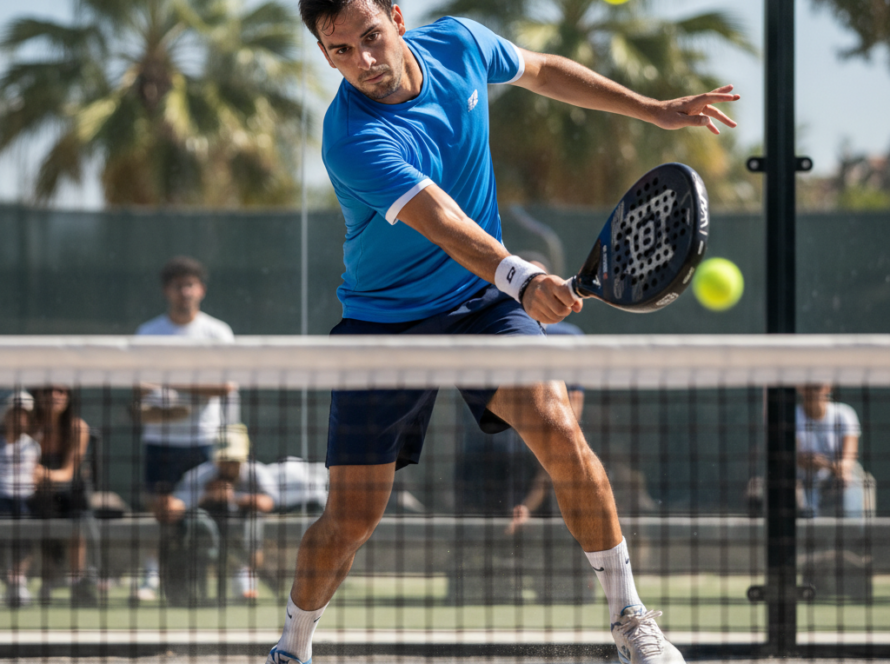
This is arguably the most critical aspect of the bandeja. The ideal contact point is around shoulder height, slightly in front and to the side of your body. Avoid letting the ball drop too low, as this reduces control and the ability to impart slice.
- Open Racket Face: Maintain an open racket face throughout the swing. This is crucial for applying backspin.
- Downward Motion: Your swing should be a controlled downward motion, brushing from high to low across the back of the ball. Imagine slicing through a cake horizontally.
- Weight Transfer: Transfer your weight from your back foot to your front foot as you make contact, generating smooth power and momentum.
3. Follow-Through and Recovery
After hitting the ball, a proper follow-through is essential for both control and preparation for the next shot.
- Long Follow-Through: Your racket should continue moving forward and down in the direction you want the ball to go. This extends the contact and ensures control.
- Body Rotation: Allow your body to rotate naturally.
- Recover Net Position: Immediately after the shot, focus on moving forward to reclaim the net. This is the strategic payoff of the bandeja: denying your opponents offensive opportunities.
For more detailed insights on other padel techniques, explore our gameplay tips.
Strategic Importance of the Bandeja
The bandeja isn’t just a stroke; it’s a tactical weapon that serves several key strategic purposes:
- Controlling the Net: The most significant advantage of the bandeja is its ability to ‘reset’ the point and allow you to return to the net. By hitting a deep, low-bouncing ball, you force opponents to either return a difficult shot from the back of the court or hit another lob, which you can then attack.
- Preventing Aggression: A good bandeja minimises the opponent’s chances of hitting an offensive shot (like a smash) off your lob. The backspin and low bounce make it hard to generate power.
- Buying Time: The slower speed of the sliced ball gives you and your partner more time to recover to an optimal defensive or offensive position.
- Fatiguing Opponents: Constantly forcing opponents to play from deep positions and retrieve low bouncing balls can be physically and mentally draining.
Understanding when and where to hit your bandeja can elevate your game significantly. It’s not a winning shot, but a rally-building, court-positioning shot.
Common Bandeja Mistakes and How to Fix Them
Many players struggle with the bandeja initially. Here are some common errors and how to correct them:
- Hitting Too Hard: Often, players try to smash the ball instead of slicing it, leading to unforced errors. Focus on technique and control over power.
- Contact Point Too Low: Letting the ball drop too much makes it difficult to add slice and depth. Move back earlier and keep the contact point high.
- Racket Face Not Open Enough: A closed racket face will result in a flat ball without slice, making it easier for opponents to attack. Ensure your racket face is open.
- Poor Footwork: Running straight back disorients players. Practice sideways shuffling and cross-steps to maintain balance.
- Not Recovering Net Position: The bandeja’s purpose is negated if you don’t move forward after hitting it. Make returning to the net an integral part of the shot sequence.
Regular practice of footwork drills and repetitive bandeja shadow swings can help ingrain the correct muscle memory. Consider reviewing other gameplay articles on our site to improve your overall strategy.
Conclusion
The padel bandeja is a cornerstone shot for any player aspiring to improve their game. It’s a strategic masterpiece that allows you to control the flow of the game, maintain offensive court position, and neutralise your opponents’ attacks. By diligently practicing the correct mechanics, understanding its strategic importance, and correcting common mistakes, you will transform your defensive play and become a more complete and formidable padel player. The bandeja is not just a shot; it’s a philosophy of disciplined, intelligent padel. Master it, and you’ll unlock new levels of success on the court.